
“The future will be green, or not at all.” – Bob Brown
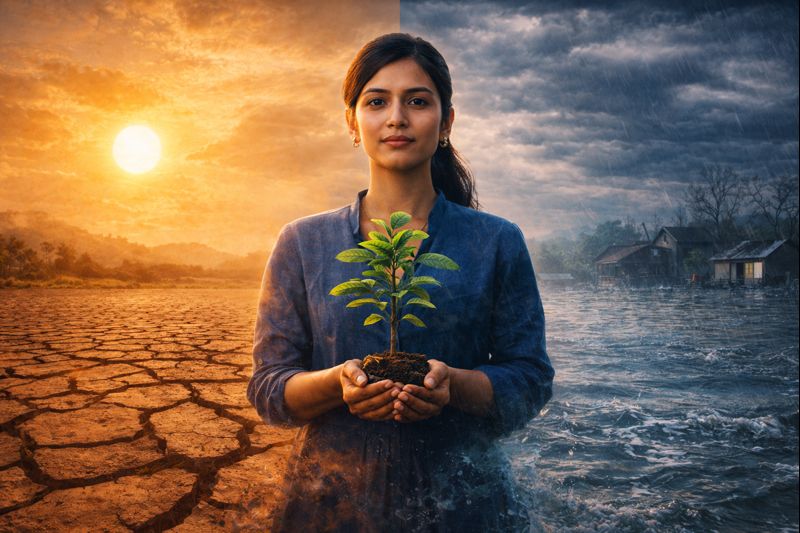
The climate crisis is no longer a distant warning whispered by scientists or confined to policy documents. It is here, relentless, and deeply unequal. Rising temperatures, vanishing coastlines, prolonged droughts, and violent floods are reshaping the world with brutal clarity. Yet within this turbulence, a profound and often under-acknowledged truth is emerging women are not merely surviving climate change, they are architecting resilience against it.
Across continents, cultures, and crises, women are redefining climate leadership. From indigenous guardians protecting ancestral lands to economists reshaping green finance, women are transforming vulnerability into visionary strength. In a warming world that demands adaptive intelligence and moral courage, women are not on the margins of climate resilience, they are at its very core.
Climate Change Is Gendered-So Is Climate Leadership
Climate change does not strike humanity evenly. It amplifies existing inequalities, and gender is one of its sharpest fault lines. Women, especially in low-income and climate-vulnerable regions, are disproportionately affected due to economic precarity, caregiving responsibilities, and limited access to resources. Yet paradoxically, it is these very communities of women who possess the most intimate knowledge of environmental stewardship.
Women are often primary water collectors, food producers, and household managers. They understand land cycles, weather rhythms, and ecological fragility not through theory, but through lived experience. This embodied knowledge transforms women into first responders of resilience, capable of designing solutions that are not only sustainable, but socially inclusive.
To ignore women’s leadership in climate resilience is to abandon one of the most powerful tools humanity has for survival.
From Grassroots to Global: Women as Architects of Climate Resilience
“I am not free while any woman is unfree, even when her shackles are very different from my own.” — Audre Lorde
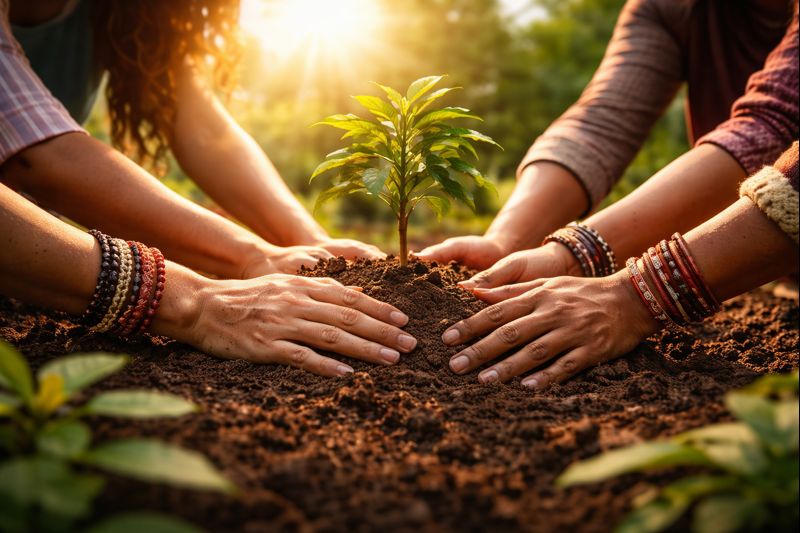
In villages battered by cyclones, women are building flood-resistant homes with locally sourced materials. In drought-stricken farmlands, women farmers are reviving indigenous seed systems to protect biodiversity. In cities suffocating under heatwaves, women urban planners are redesigning infrastructure to prioritize green spaces and climate-safe housing.
This is climate resilience in action, driven not by rhetoric, but by relentless innovation.
At the global level, women are shaping climate diplomacy, environmental law, and sustainable finance. Female negotiators have consistently pushed for stronger climate commitments and community-centered adaptation strategies. Studies show that when women participate meaningfully in climate governance, environmental outcomes improve and policies endure longer.
Resilience, after all, is not only about surviving disasters, but also about reshaping systems so disasters do not devastate lives.
The Quiet Power of Indigenous and Rural Women

Among the most formidable yet overlooked climate leaders are indigenous women. They are custodians of ecosystems that regulate global climate patterns, from rainforests to wetlands. Their leadership is ancestral, spiritual, and deeply ecological.
Indigenous women understand that climate resilience is not a technical fix, it is a relationship with nature. Their resistance against deforestation, extractive industries, and land dispossession is not activism alone; it is planetary defense.
When indigenous women defend their land, they are defending carbon sinks, water systems, and biodiversity for all of humanity. Silencing their voices is not just unjust, it is ecologically catastrophic.
Climate Resilience as Economic Power
“There is no tool for development more effective than the empowerment of women.” – Kofi Annan
Climate resilience is also an economic imperative. As climate disasters intensify, economies crumble where adaptation is weak. Women’s leadership in climate-smart agriculture, renewable energy, and green entrepreneurship is proving that resilience and economic growth are not opposites, they are allies.
Women-led enterprises are driving solar micro-grids, sustainable fisheries, and circular economies. These initiatives do more than reduce emissions; they create jobs, stabilize communities, and foster long-term prosperity.
Investing in women is not charity. It is strategic climate economics.
Political Will and the Power of Representation
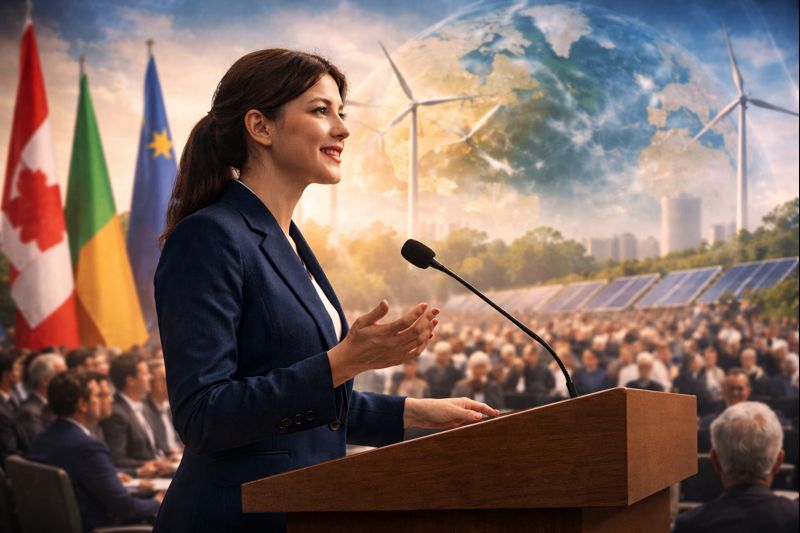
Despite their impact, women remain underrepresented in climate decision-making spaces. This absence is costly. Climate policies designed without women often fail to account for caregiving burdens, informal economies, and community realities.
When women lead politically, climate agendas become more ambitious, equitable, and people-centered. Female leaders worldwide have demonstrated stronger commitments to environmental protection, social welfare, and disaster preparedness.
Climate resilience demands inclusive governance, where women’s voices are not symbolic but authoritative.
Redefining Resilience: From Survival to Transformation
Resilience is often framed as endurance the ability to withstand shocks. Women are redefining it as transformation. They are challenging extractive systems, questioning unsustainable growth models, and advocating for climate justice rooted in equity.
This is not resilience that tolerates injustice. It is resilience that dismantles it.
Women are insisting that climate action must address poverty, racial inequality, and gender discrimination simultaneously. Because a planet cannot heal if its people remain fractured.
Why the Future of Climate Action Is Unmistakably Feminist
A feminist approach to climate resilience recognizes power imbalances, values care economies and prioritizes intergenerational justice. It understands that the climate crisis is not only environmental it is ethical.
Women bring collaborative leadership, long-term thinking, and community accountability into climate action. These qualities are not soft skills; they are survival skills for the 21st century.
The climate crisis does not need louder voices it needs wiser leadership.
A Call to Recognize, Resource, and Respect Women Climate Leaders
The path forward is clear. Women must be recognized as central agents of climate resilience. They must be resourced with education, finance, and political power. And their leadership must be respected not as an exception, but as a norm.
The warming world is testing humanity’s capacity for adaptation and empathy. Women are already answering that test with courage, creativity, and conviction.
The question is no longer whether women should lead climate resilience.
The question is whether the world can afford not to follow them.
Suggested References & Further Reading
- UN Women – Gender and Climate Change
https://www.unwomen.org/en/what-we-do/climate-change - Intergovernmental Panel on Climate Change (IPCC) – Climate Impacts and Adaptation
https://www.ipcc.ch - World Bank – Gender, Climate Change, and Development
https://www.worldbank.org/en/topic/gender/publication/gender-and-climate-change - Global Commission on Adaptation – Gender-Responsive Climate Resilience
https://gca.org - FAO – Women as Agents of Change in Climate Resilience
https://www.fao.org/gender