
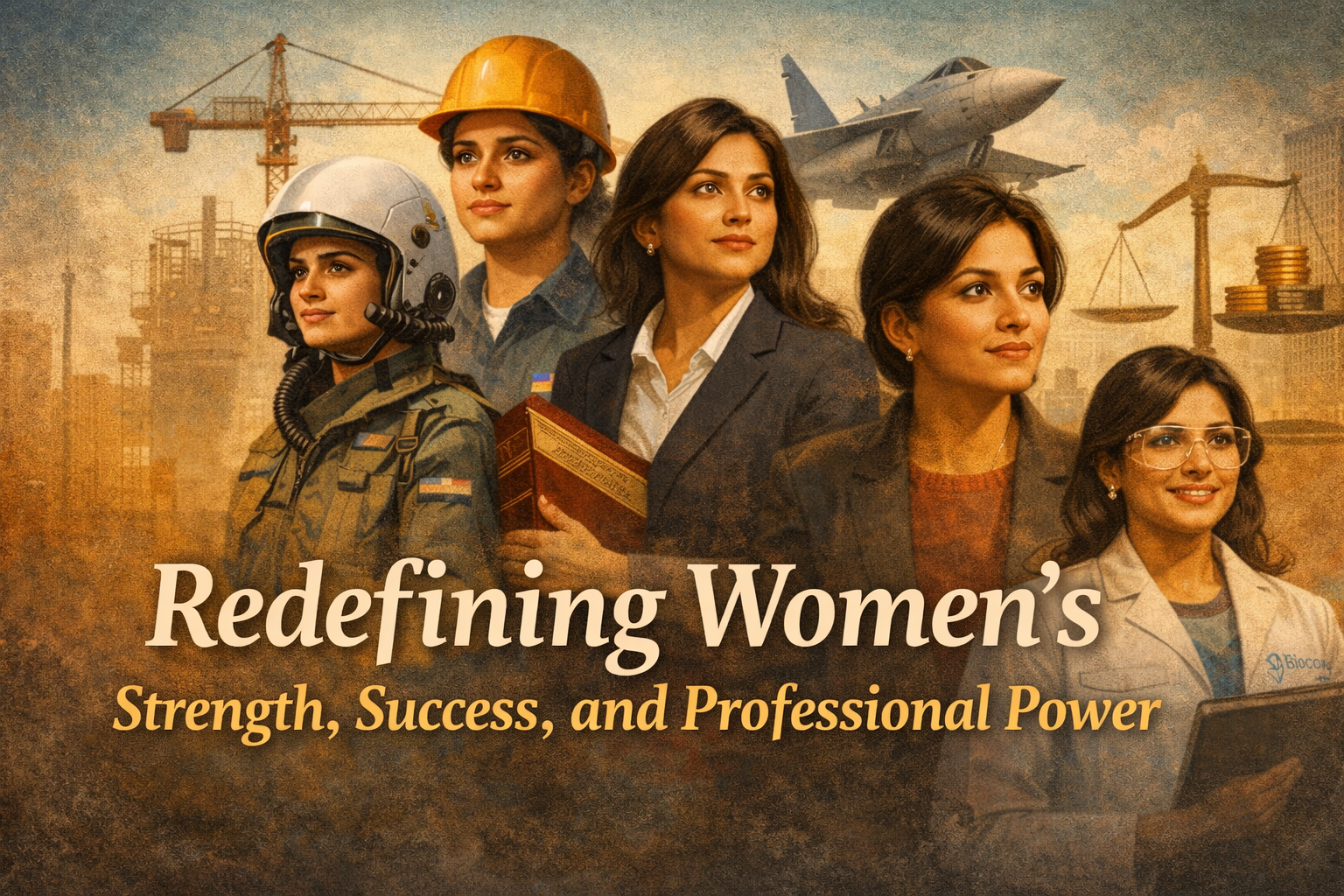
Women actively pursue careers in male-dominated fields across India and the globe in 2025. They shatter glass ceilings in sectors like engineering, aviation, and law. However, persistent challenges still hinder their progress. This article explores these barriers, highlights inspirational stories from Indian women, and offers strategies for advancement. Moreover, it examines future trends to motivate aspiring professionals.
In recent years, women have made significant strides. For instance, female participation in India’s workforce has risen, though gaps remain. Labor force participation for women stands at 32.8%, compared to 77.1% for men. Additionally, the global gender gap has closed to 68.8%. These figures underscore the urgency for continued efforts.
For reports:
https://www.mospi.gov.in/statistical-reports
Furthermore, 2025 marks a pivotal year. Economic shifts and policy changes propel women forward. Yet, systemic issues like wage disparities and limited opportunities persist. Women earn 84 cents for every dollar men make in full-time roles. Consequently, breaking barriers requires collective action from individuals, organizations, and governments.
Historical Context and Persistent Barriers
Historically, male-dominated fields have excluded women through societal norms and biases. In India, traditions often steered women toward “feminine” roles. However, globalization and education have challenged these norms. Despite this, barriers endure in 2025.
For example, gender stereotypes discourage women from entering fields like STEM and military service. Women face skepticism about their capabilities. Moreover, workplace cultures often favor men, leading to isolation for female employees.
Additionally, lack of mentorship hampers advancement. In male-dominated environments, women receive fewer networking opportunities. This results in slower career progression. Furthermore, work-life balance issues exacerbate the problem, especially for mothers.
Sexual harassment remains a critical barrier. Many women encounter inappropriate behavior, deterring them from staying in these fields. However, reporting mechanisms have improved, though enforcement varies.
Wage gaps persist as another hurdle. Even in 2025, women in technical roles earn less than male counterparts. This disparity discourages long-term commitment. Moreover, promotion biases favor men, creating a cycle of inequality.
Structural issues in education also play a role. Fewer women enroll in engineering or aviation programs. Consequently, the talent pipeline remains narrow. Yet, initiatives like scholarships aim to bridge this gap.
In India specifically, cultural expectations add layers of complexity. Family pressures often prioritize marriage over careers. However, urban shifts are changing this narrative.
Overall, these barriers intersect, making advancement tougher. Nevertheless, women actively combat them through resilience and innovation.
Inspirational Stories: Indian Women Leading the Way
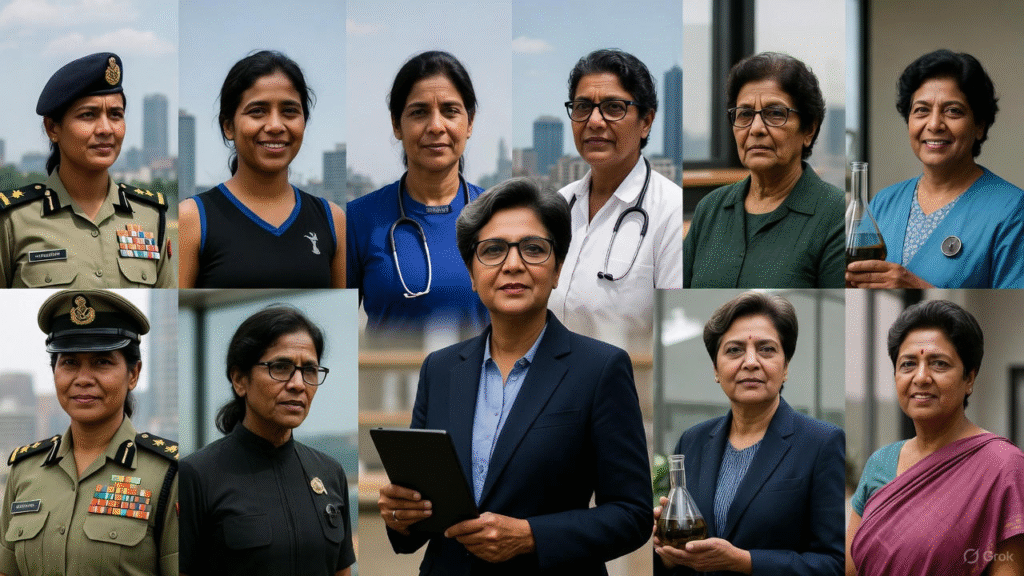
Indian women inspire generations by breaking into male-dominated fields. They demonstrate courage and determination. For instance, Gunjan Saxena stands as a beacon of hope.
Gunjan Saxena became India’s first female combat pilot in 1999. She flew Cheetah helicopters during the Kargil War. Despite facing male chauvinism, she evacuated injured soldiers under fire. Her story motivates young women to pursue aviation careers.
Moreover, Saxena’s journey highlights perseverance. She challenged norms in the Indian Air Force. Today, in 2025, her legacy encourages more women to join the military.
Similarly, MC Mary Kom excels in boxing, a male-dominated sport. She won multiple world championships and an Olympic bronze. Kom balances motherhood with her career, inspiring countless athletes.
Furthermore, her resilience against poverty and discrimination fuels motivation. In 2025, Kom advocates for women’s sports, pushing for equal funding.
Kiran Mazumdar-Shaw revolutionized biotechnology. She founded Biocon in a garage, facing funding rejections due to gender biases. Now, her company leads in pharmaceuticals, employing thousands.
Additionally, Mazumdar-Shaw mentors young entrepreneurs. Her success in STEM fields shows women can thrive in innovation-driven sectors.
Kalpana Chawla, though no longer with us, remains inspirational. As India’s first woman in space, she broke barriers in aerospace. Her 1997 NASA mission motivated girls to dream big.
In 2025, scholarships in her name support STEM education for women. This continues her legacy.
Kiran Bedi transformed policing as India’s first female IPS officer. She reformed prisons and fought corruption. Bedi’s leadership in law enforcement paves the way for more women in security roles.
Moreover, her story emphasizes integrity and boldness. Women now surge into legal fields, with applications up 137% from 2024 to 2025.
Indra Nooyi dominated corporate America as PepsiCo’s CEO. Born in India, she navigated cultural and gender challenges. Nooyi’s strategic decisions grew the company exponentially.
Furthermore, she promotes diversity in boardrooms. In 2025, her advice guides Indian women in finance and management.
These women share common traits: resilience and vision. They turn obstacles into opportunities. Consequently, their stories motivate others to persist.
For example, Sania Mirza conquered tennis, a sport with few Indian women. Her Grand Slam wins challenged stereotypes. Mirza now inspires through coaching.
Additionally, Srividya Rajan, Saxena’s colleague, flew in Kargil too. Together, they proved women’s mettle in combat.
These narratives fuel motivation. They show that barriers, though daunting, yield to determination.
Strategies to Overcome Barriers in 2025
Women employ various strategies to advance in male-dominated fields. Education forms the foundation. Pursuing STEM degrees equips them with necessary skills.
Moreover, scholarships and affirmative action programs help. In India, government initiatives target female enrollment in engineering.
Networking builds crucial alliances. Women join professional groups to connect with mentors. For instance, organizations like Women in Tech offer support.
Additionally, mentorship programs pair women with experienced leaders. This guidance accelerates career growth.
Advocacy for policy changes drives systemic reform. Companies implement diversity quotas. Furthermore, governments enforce equal pay laws.
In 2025, flexible work policies aid work-life balance. Remote options allow women to manage families and careers.
Skill-building workshops enhance confidence. Women learn negotiation tactics to demand fair wages.
Moreover, allyship from men amplifies voices. Male colleagues challenge biases, creating inclusive environments.
Entrepreneurship offers an alternative path. Women start ventures in male-dominated sectors, like biotech.
For example, funding programs for female founders have increased. This empowers innovation.
Resilience training combats burnout. Women practice self-care to sustain long-term success.
Furthermore, visibility through media shares success stories. Films like “Gunjan Saxena: The Kargil Girl” inspire audiences.
Career planning maps out progression. Setting goals and seeking feedback ensures steady advancement.
Additionally, legal recourse addresses harassment. Strong HR policies protect women.
In India, schemes like Atal Pension Yojana include more women, at 48%. This financial security supports career risks.
Overall, these strategies empower women. They transform barriers into stepping stones.
The Role of Technology and Innovation
Technology accelerates women’s advancement in 2025. AI and digital tools level the playing field. Women leverage online platforms for learning.
For instance, MOOCs offer free STEM courses. This democratizes education.
Moreover, innovation hubs incubate female-led startups. In India, tech parks support women in AI and robotics.
Virtual reality training simulates male-dominated environments. This builds skills safely.
Furthermore, data analytics highlights gender gaps. Companies use insights to improve diversity.
Blockchain ensures transparent hiring. This reduces biases.
Additionally, social media amplifies voices. Women share experiences, building communities.
In creative fields, women’s applications rose 98% from 2024 to 2025. Digital tools fuel this surge.
However, tech also poses challenges like cyber harassment. Strong safeguards mitigate risks.
Overall, innovation propels progress. Women harness it to break barriers.
Future Outlook and Motivation
Looking ahead, 2025 trends promise brighter prospects. Women’s participation in legal roles surged 137% recently. This momentum continues.
Moreover, technical design saw 87% growth in female applicants. Projections indicate further increases.
Policy shifts enhance support. Governments invest in training programs.
Furthermore, cultural changes normalize women’s roles in these fields. Media portrays strong female leads.
Motivation stems from role models like Saxena. They remind women of their potential.
Additionally, community support fosters resilience. Women unite to advocate change.
In 2025, optimism prevails. Barriers weaken as women advance boldly.
Conclusion
Women actively reshape male-dominated fields in 2025. Through stories like Gunjan Saxena’s, they find motivation. Strategies and technology aid their journey.
However, collective effort remains essential. Society must dismantle remaining barriers.
Ultimately, empowered women drive innovation and equality. Their advancement benefits all. Let’s celebrate and support this progress.