
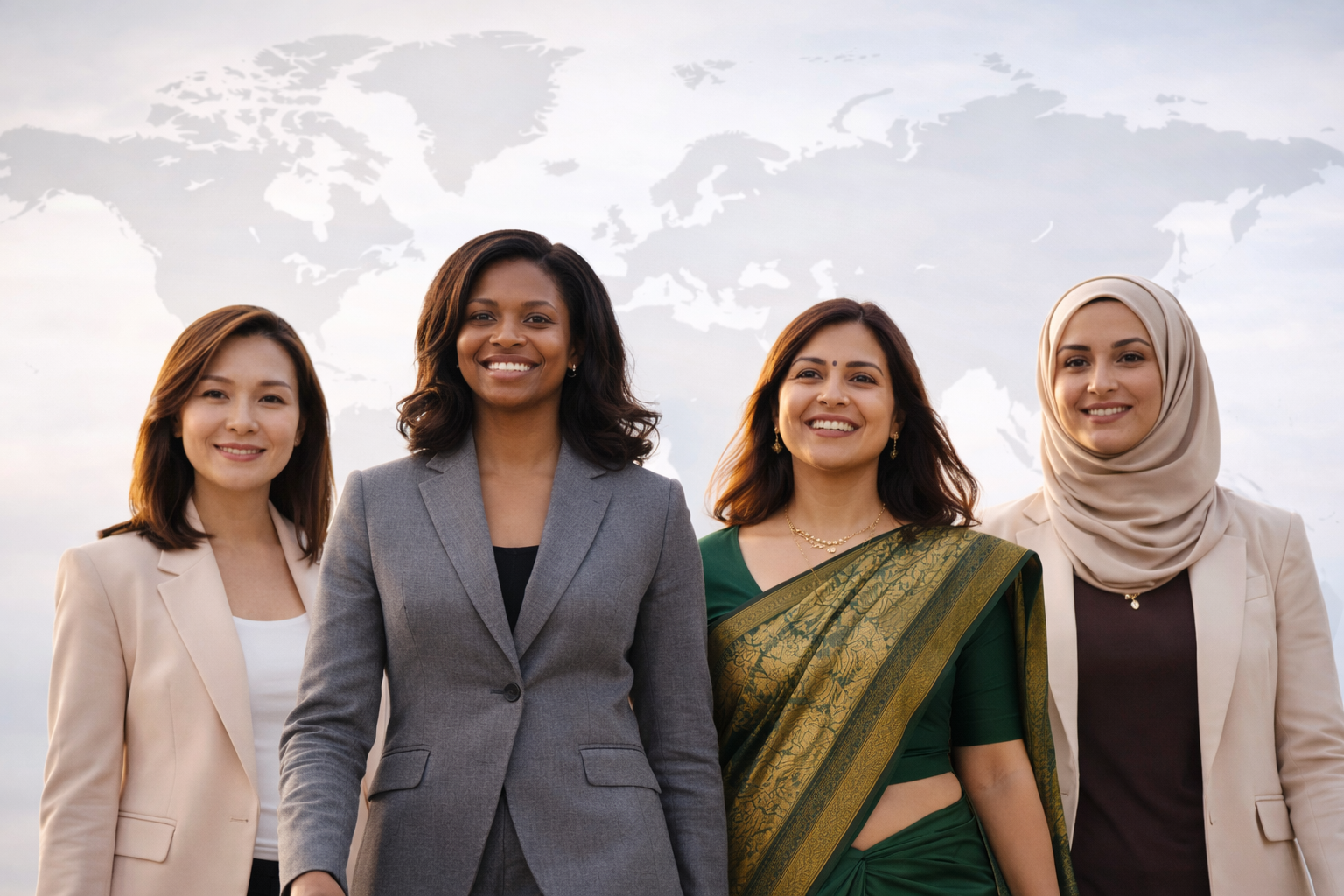
“There is no limit to what we, as women, can accomplish.”
– Michelle Obama
Leadership has always shaped the destiny of nations. It determines how laws are written, how resources are distributed, and whose voices are heard. However, when women rise to political leadership, the impact reaches far beyond parliaments and policies.
In reality, women’s political representation reshapes career opportunities, workplace cultures, and economic futures. As a result, societies that empower women leaders often witness stronger labor participation, greater equity, and sustainable growth. Political power, therefore, becomes more than authority it becomes a bridge between aspiration and achievement.
Power That Shapes Possibility
Politics quietly constructs the framework within which careers either thrive or struggle. Employment laws, wage structures, childcare policies, and workplace protections do not evolve by accident. Instead, they are crafted by those who occupy positions of authority.
Historically, women were largely excluded from these decisions. Consequently, economic systems undervalued care work, tolerated wage gaps, and treated women’s careers as secondary. However, when women enter political leadership, this imbalance begins to shift.
Female leaders bring lived experience into policymaking. As a result, governance becomes more responsive, inclusive, and grounded in reality. Career growth no longer depends solely on individual resilience but is supported by structural reform.
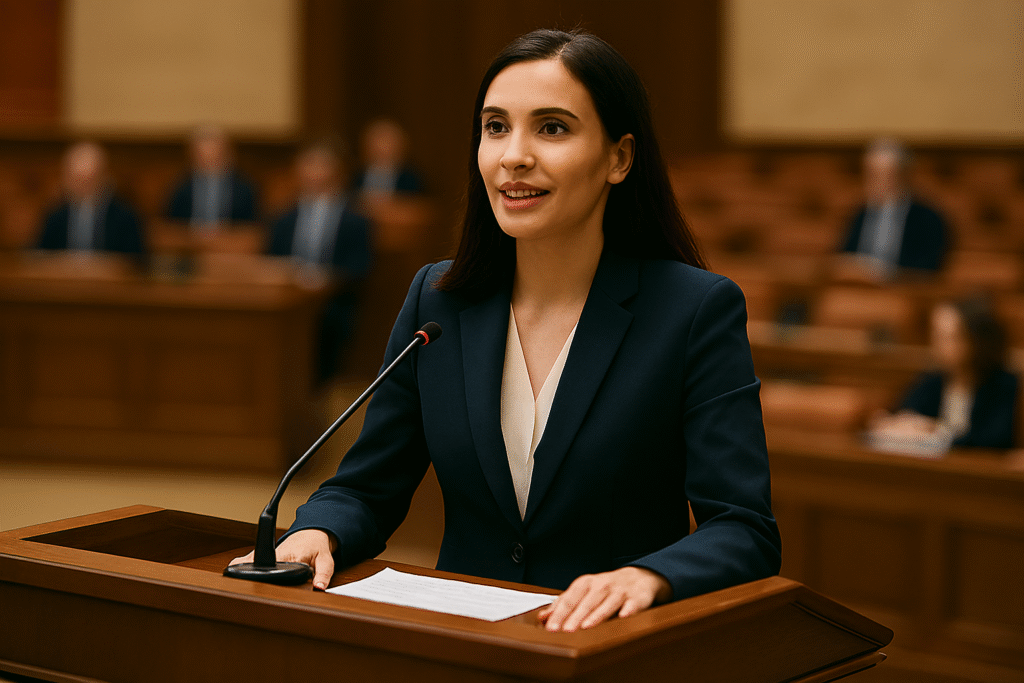
From Representation to Real Power
Representation is not merely symbolic. Rather, it determines which priorities dominate national agendas. When women hold political office, issues once dismissed as private concerns move into the public sphere.
For instance, equal pay, parental leave, workplace safety, and protection against harassment gain legislative urgency. Moreover, these reforms directly influence women’s ability to enter, remain, and advance in the workforce.
At the same time, visibility matters. Young women who see female leaders internalise leadership as attainable. Therefore, political representation nurtures ambition, confidence, and long-term career vision.
Policies That Open Career Pathways
Career growth is often portrayed as a product of personal effort. However, ambition alone cannot overcome broken systems. Women leaders frequently recognise this truth.
As a result, their policymaking focuses on removing structural barriers. Flexible work policies, affordable childcare, gender-responsive budgeting, and education reform are not fringe initiatives. Instead, they are economic strategies.

Notably, such policies benefit entire societies. Workforce participation increases, productivity improves, and economic resilience strengthens. Consequently, women’s leadership transforms policy into opportunity.
The Career Multiplier Effect
When women lead politically, the impact on careers is exponential. One law can unlock millions of futures. One budget decision can reshape generations.
For example, maternity protection laws do not merely support mothers. Rather, they stabilise families and strengthen labor markets. Similarly, investments in girls’ education expand the skilled workforce over time.
Meanwhile, women leaders often adopt an intersectional lens. They address class, caste, race, and geography alongside gender. As a result, career growth becomes more inclusive and equitable.
Redefining Leadership Norms

Traditional leadership has long been associated with dominance and rigidity. In contrast, women leaders frequently practise collaboration, empathy, and long-term thinking.
This shift matters deeply. Political leadership sets cultural standards. Therefore, when governance models transparency and accountability, these values ripple into professional spaces.
Career success begins to align with integrity rather than endurance. Ultimately, leadership becomes a force that uplifts rather than exhausts.
The Economic Cost of Exclusion
Excluding women from political leadership carries tangible consequences. Economies with limited female representation often experience stagnant workforce participation and persistent inequality.
In reality, underutilising women’s leadership is economically inefficient. Moreover, career stagnation among women translates into lost innovation and reduced GDP.
As global economies face uncertainty, inclusive leadership is no longer optional. Instead, it is a strategic necessity.
Challenging the Myth of Meritocracy
The idea that careers advance purely on merit remains deeply ingrained. However, women leaders often expose how systemic bias distorts opportunity.
By advocating transparent hiring, fair promotion systems, and accountability, they challenge entrenched inequalities. Consequently, workplaces move closer to genuine fairness.
Talent begins to matter more than identity. As a result, ambition flourishes without penalty.
Global Leadership, Shared Futures
Across the world, women leaders are reshaping governance. Their contexts differ, yet their impact converges around a shared truth.
Inclusive leadership strengthens economies. Education improves. Health systems stabilise. Environmental policies gain urgency. Meanwhile, careers become more sustainable and dignified.
These leaders govern not only for women but for societies as a whole. Therefore, political representation becomes a collective gain.
Leadership as Legacy
Women’s political representation is not an endpoint. Rather, it is the foundation for deeper transformation.
The path ahead requires dismantling cultural resistance, supporting women candidates, and protecting women leaders from political violence. At the same time, institutions must embed gender-sensitive governance.
Career growth for future generations depends on today’s leadership choices. As history shows, progress accelerates when women lead.
“Feminism is not about making women stronger. Women are already strong. It is about changing how the world perceives that strength.”
– G.D. Anderson
When Leadership Lifts All
Ultimately, women’s political leadership reshapes societies from the inside out. Policies become pathways. Representation becomes reassurance.
When women lead, careers do not merely advance, they transform. Therefore, the question is no longer whether women belong in political power.
The real question is how much progress is lost when they are excluded. Because,

when women lead, nations do not just govern better they grow stronger.
For more understanding –
- UN Women – Women’s Leadership and Political Participation
- World Economic Forum – Global Gender Gap Report