

For generations, women’s sexual health lived in the shadows wrapped in euphemisms, diluted by discomfort, and often erased by cultural silence. Across households, classrooms, and even clinics, people treated the subject as delicate territory rather than essential knowledge.
The result was not modesty; it was misinformation, fear, and preventable harm.
Today, however, the landscape is shifting. We are witnessing the dawn of a new era, one where women are increasingly reclaiming the narrative around their bodies, their choices, and their wellbeing. Yet progress remains uneven. Even though conversations have grown louder, many systems still fragment access to accurate, inclusive, and stigma-free sexual health education.
This matters deeply. Sexual wellness is not a peripheral luxury; it is a foundational pillar of women’s physical, emotional, and social health. Without informed awareness, women remain vulnerable to unintended pregnancies, untreated infections, coercive relationships, and chronic reproductive complications.
In our previous article, Nurturing the New You: The True Importance of Postpartum Care, we explored how women’s bodies continue to need care long after childbirth. Sexual wellness is the natural continuation of that conversation. Because healing, autonomy, and pleasure are not separate chapters, instead they are the interconnected threads in the tapestry of women’s health.
As we step forward, this article illuminates how sexual health education for women has evolved, where the gaps still persist, and what the future urgently demands.
From Taboo to Talk: The Evolution of Sexual Health Education
Not long ago, sexual health education for girls was either minimal or entirely absent. Where it did exist, educators often framed it through a narrow lens of fear, focusing primarily on abstinence, danger, and moral caution rather than informed empowerment.
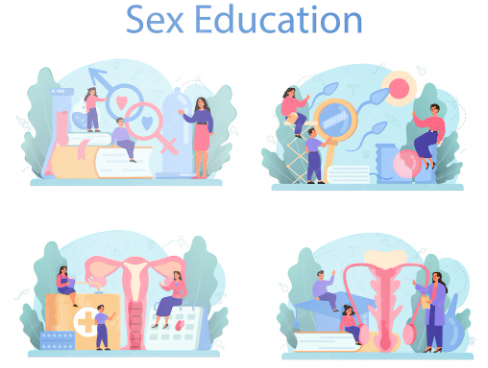
Historically, the curriculum in many parts of the world treated female sexuality as something to control rather than understand. Educators delivered biological facts in clinical isolation and stripped them of emotional context, consent education, and discussion of bodily autonomy. They rarely mentioned pleasure and often stigmatized desire. They also discouraged questions.
However, over the past few decades, a gradual but significant transformation has begun. Public health research, feminist advocacy, and global development initiatives have collectively pushed for comprehensive sexuality education (CSE) an approach that recognizes sexual health as multidimensional.
Today’s more progressive frameworks include discussions around consent, healthy relationships, menstrual literacy, contraception options, and protection against sexually transmitted infections. Digital platforms have further democratized access to information, allowing young women to seek answers beyond traditional gatekeepers.
Yet the evolution remains incomplete. In many regions, including parts of South Asia, sexual education is still inconsistently implemented, culturally contested, or medically superficial. The new era has begun but it has not yet reached every classroom, clinic, or community.
Why Women Need a Distinct Sexual Health Lens
One of the most persistent oversights in public health has been the assumption that sexual education is gender-neutral. In reality, women’s sexual health experiences are profoundly shaped by biological, hormonal, and social differences that demand a tailored lens.
Biologically, women face unique reproductive health dynamics like menstrual cycles, pregnancy potential, postpartum recovery, and menopause transitions. Hormonal fluctuations influence not only fertility but also mood, libido, and vaginal health. Without education that acknowledges these nuances, women are left navigating complex bodily changes with partial understanding.
Socially, the disparities deepen. Women disproportionately face risks of sexual coercion, early marriage in some regions, limited negotiation power in relationships, and greater stigma around sexual expression. These realities make consent education, boundary-setting skills, and rights awareness especially critical.
Moreover, healthcare research historically underrepresented female bodies, leading to gaps in symptom recognition and treatment protocols. Even today, many women report that their sexual health concerns like pain during intercourse, low libido, or recurrent infections are minimized or dismissed.
A distinct sexual health lens is not about separation; it is about precision, equity, and lived reality. When education reflects women’s actual experiences, it becomes not only informative but profoundly protective.
The Hidden Cost of Inadequate Sexual Education
When sexual health education is incomplete or absent, the consequences ripple quietly but powerfully across women’s lives.
Many young women enter adulthood with fragmented knowledge about their own anatomy. Some cannot identify signs of reproductive infections. Others misunderstand fertility windows. Many feel deep embarrassment seeking help for sexual pain or irregular cycles. These gaps are not personal failures—they are systemic omissions.
Inadequate education also fuels preventable health risks. Globally, millions of women continue to face unintended pregnancies and untreated sexually transmitted infections, often due to misinformation or lack of access to reliable guidance.
Equally concerning is the emotional toll. Silence breeds shame. Shame breeds hesitation. And hesitation delays care. Women who feel uncomfortable discussing sexual concerns with partners or healthcare providers may endure discomfort or distress for years.
Furthermore, without consent-focused education, young women may struggle to recognize coercive or unhealthy relationship dynamics. Sexual wellness is not only about biology, but also deeply intertwined with agency, dignity, and safety.
The cost of inadequate education is therefore not abstract. It is written into real bodies, real relationships, and real life trajectories.
Digital Awakening: How Technology Is Reshaping Awareness
One of the most transformative forces in the new era of women’s sexual wellness is the digital revolution. Smartphones, telehealth platforms, and online communities have begun to dismantle long-standing information barriers.
Today, a young woman in a small town can access menstrual tracking apps, evidence-based reproductive health websites, and confidential teleconsultations that were unimaginable a generation ago. Social media, despite its pitfalls, has also opened spaces for candid conversations about periods, contraception, pleasure, and consent.
However, this digital awakening is a double-edged phenomenon. Alongside credible information, misinformation spreads rapidly. Viral myths about fertility, contraceptive side effects, or “quick fixes” for sexual concerns can create confusion and anxiety.
Digital literacy therefore becomes as important as digital access. Women need not only information but the skills to discern credible sources from persuasive noise.
When harnessed responsibly, technology has the power to make sexual health education more personalized, private, and empowering than ever before. The future of women’s wellness will undoubtedly be both human and digital and the challenge ahead is ensuring it remains evidence-based and inclusive.
Consent, Communication, and Confidence: The Missing Pillars

For too long, sexual education focused heavily on anatomy while neglecting the emotional and relational dimensions of sexual wellbeing. Yet the ability to communicate boundaries, express comfort levels, and understand consent is central to women’s safety and autonomy.
Many women grow up receiving mixed messages: be modest but attractive, be agreeable but cautious, be informed but not outspoken. These contradictions can erode confidence in intimate decision-making.
Comprehensive sexual wellness education must therefore move beyond biological diagrams. It must cultivate assertive communication skills, boundary awareness, and emotional literacy.
When women are equipped to articulate what feels safe and respectful, relationship dynamics shift in powerful ways. Consent becomes an ongoing conversation rather than a one-time checkbox. Mutual respect replaces silent endurance.
Importantly, this education must begin early and continue across life stages from adolescence through postpartum years and into midlife. Sexual wellness is not static; it evolves with hormonal changes, relationship contexts, and health conditions.
By strengthening confidence alongside knowledge, we move closer to a model of sexual health that is not merely preventive but deeply empowering.
Bridging the Gaps: What the Future of Sexual Health Education Must Deliver
Despite progress, significant gaps remain in how sexual health education reaches women across socioeconomic, geographic, and cultural contexts. The future demands a more holistic, intersectional, and life-course approach.
Education must begin earlier but also continue longer. It should include menstrual literacy for young girls, contraception counseling for reproductive-age women, postpartum sexual health guidance for new mothers, and menopause-related education for midlife women.
Healthcare providers need better training to initiate non-judgmental conversations. Schools must adopt evidence-based curricula rather than fear-driven modules. Workplaces can play a role by supporting reproductive health awareness and access.
Crucially, sexual wellness must be framed not only around risk prevention but around wellbeing, comfort, and informed choice. When the narrative expands beyond danger to include dignity and agency, women engage more openly and proactively.
Policy support will also be essential. National health programs that integrate comprehensive sexuality education with accessible reproductive services have shown measurable improvements in maternal and reproductive outcomes worldwide.
The future is not simply about more information, it is about better, kinder, and more inclusive education ecosystems.
Lighting the Path Forward
“The most courageous act is still to think for yourself. Aloud.” – Coco Chanel
Women’s sexual wellness is finally stepping out of the shadows but the journey is far from complete.
We stand at a pivotal moment where science, technology, and social awareness are converging. If harnessed thoughtfully, this convergence can dismantle decades of silence and replace them with clarity, confidence, and compassionate care.
From our earlier conversations in this series from postpartum recovery to broader reproductive health themes the message remains consistent: women’s health cannot be fragmented. It must be understood as a continuous, evolving journey.
As we move into the next article on Sexual Health & Safety, the focus will deepen further into how women can protect their bodies, assert their rights, and navigate intimacy with informed confidence.
Because the true new era of women’s sexual wellness will not be defined merely by access to information.
It will be defined by how boldly women are supported to use it.
- World Health Organization – Comprehensive Sexuality Education
https://www.who.int/health-topics/sexual-health - UNESCO – International Technical Guidance on Sexuality Education https://www.unesco.org/en/health-education
- United Nations Population Fund (UNFPA) – Sexual and Reproductive Health https://www.unfpa.org/sexual-reproductive-health
- Ministry of Health & Family Welfare, India – Adolescent Health Programme https://nhm.gov.in/index1.php?lang=1&level=2&sublinkid=818&lid=221
- American Sexual Health Association – Women’s Sexual Health Resources https://www.ashasexualhealth.org