
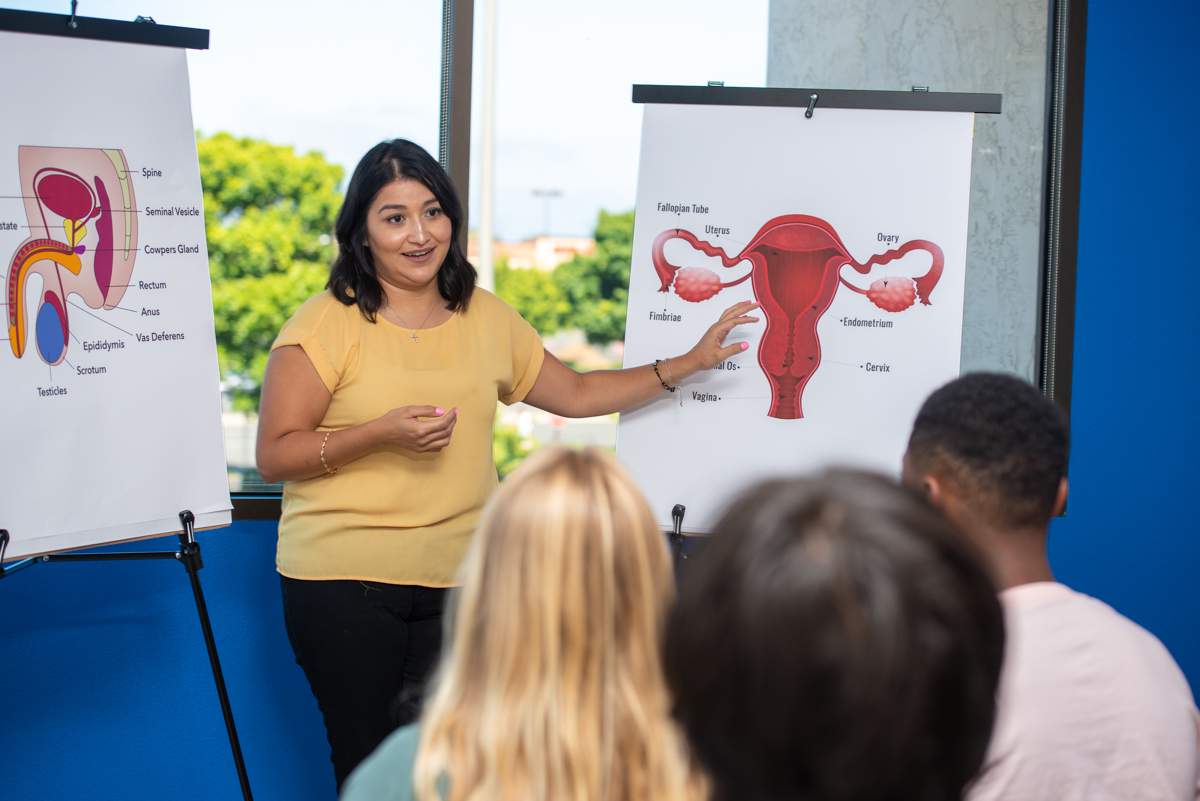
There is a moment in every girl’s life when confusion quietly replaces childhood certainty. Her body begins to change, questions multiply, and yet too often the answers remain locked behind silence, discomfort, or half-truths.
This is where the real crisis begins.
Reproductive health education goes far beyond biology lessons tucked into a textbook. It builds agency, safety, confidence, and lifelong wellbeing. Yet many classrooms worldwide still deliver information to young people in fragmented, overly euponistic, or dangerously incomplete ways.
In our previous article, Menstrual Dignity Now: Break Barriers, Boost Access, we explored how silence and stigma around menstruation undermine girls’ dignity and health. That silence does not begin at menarche, it begins much earlier, in classrooms that hesitate, curricula that dilute facts, and systems that underestimate young minds.
As Kofi Annan once stated with piercing clarity:
“Knowledge is power. Information is liberating.”
When educators withhold, dilute, or delay reproductive health education, they withhold power itself.
The Quiet Curriculum Gap
Across many education systems, reproductive health education exists but only nominally. Schools often compress the content into a few hurried chapters, present it awkwardly, or skip it altogether because of discomfort.
Students memorize diagrams of reproductive organs yet remain startlingly unprepared for real-life questions about consent, bodily autonomy, hormonal changes, contraception, sexually transmitted infections, or emotional wellbeing. What is missing is not information alone; it is context, continuity, and courage.
Too often, curricula treat reproductive health as a one-time biological event rather than an evolving life skill. As a result, adolescents often piece together fragmented knowledge from peers, social media, or unreliable online sources. The consequences can be profound: misinformation, anxiety, unsafe practices, and delayed help-seeking.
When education systems whisper, misinformation shouts.
Why Early Education Matters More Than Ever
The adolescent years shape far more than academic growth. During this sensitive and formative phase, the brain develops rapidly, emotions intensify, and young people begin to form their deepest beliefs about their bodies, relationships, and self-worth. What they learn or fail to learn during this window often echoes throughout their adult lives.
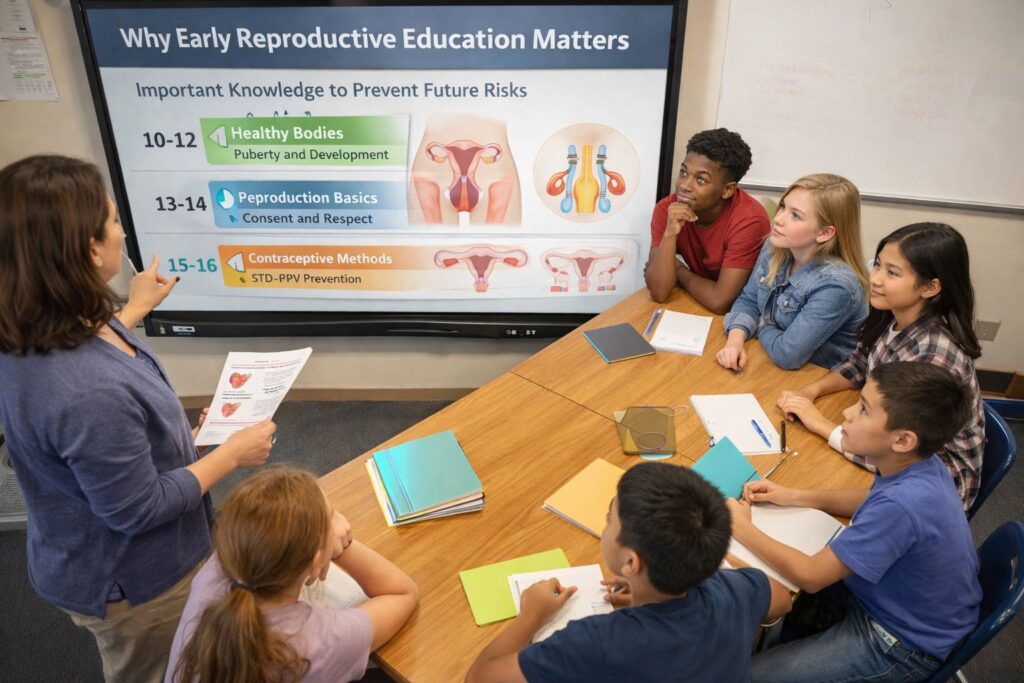
Early reproductive health education, when delivered clearly and compassionately, gives young people something profoundly important: confidence without confusion. It helps them understand the physical and emotional changes they experience without fear or shame. Instead of feeling alarmed by puberty, they learn to recognize it as a natural and healthy transition. This clarity reduces anxiety and replaces secrecy with self-assurance.
Moreover, timely education strengthens young people’s ability to recognize unsafe or uncomfortable situations. When adolescents understand consent, bodily autonomy, and personal boundaries, they become better equipped to protect themselves and to respect others. This knowledge does not push them toward risky behavior as many critics still assume. In fact, global research consistently shows the opposite. Young people who receive comprehensive, age-appropriate reproductive health education often delay early sexual activity, make safer choices when they do become sexually active, and demonstrate stronger overall health awareness.
Just as importantly, early education encourages help-seeking behavior. Adolescents who understand their bodies are more likely to speak up about health concerns, approach trusted adults, and access medical care when needed. Silence, by contrast, often breeds delay, misinformation, and preventable harm.
The World Health Organization has repeatedly emphasized that comprehensive sexuality education forms a cornerstone of adolescent wellbeing and public health. Yet despite this strong global consensus, implementation remains uneven and, in many regions, painfully inadequate.
The truth is simple but urgent: when we educate early, we do not take away innocence. we build informed, resilient futures.
The Culture of Discomfort: When Adults Avoid the Conversation
One of the most persistent barriers is not policy infect it is discomfort.
Teachers often report feeling undertrained or embarrassed. Parents worry that early education may “encourage curiosity.” School administrators fear backlash from communities.
As a result, many educators soften, postpone, or sanitize the subject. But young people are not living in informational isolation. They are navigating a hyperconnected digital world where myths, pornography, peer pressure, and misinformation circulate freely.
Silence does not preserve innocence. It abandons adolescents to learn from the loudest and often least reliable sources available.
Breaking this cycle requires equipping adults with training, language, and confidence. Reproductive health education must be normalized as a standard educational responsibility, not treated as an awkward extracurricular topic.
What’s Missing Inside Most Classrooms
Despite progress in some regions, several critical dimensions of reproductive health education remain conspicuously absent or underdeveloped.
Many curricula still focus narrowly on anatomy and menstruation while neglecting emotional literacy, consent, digital safety, gender respect, and relationship skills. Discussions around pleasure, boundaries, and communication are very essential for healthy adulthood which are often considered too sensitive, yet their absence leaves dangerous knowledge gaps.
Inclusivity is another blind spot. Students with disabilities, LGBTQ+ youth, and those from marginalized communities frequently find themselves invisible within standard curricula. When education fails to reflect diverse realities, it quietly signals whose health and dignity are prioritized and whose are not.
Moreover, reproductive health is rarely taught as a continuous life-course subject. Instead, it appears briefly in middle school and then vanishes, despite the fact that young adulthood brings new challenges: contraception decisions, PCOS symptoms, mental health fluctuations, and relationship dynamics.
Education that arrives too late or disappears too early, cannot fully protect.
The Digital Generation: New Risks, New Responsibilities
Today’s adolescents are the most digitally connected generation in history. This reality creates both unprecedented opportunities and complex vulnerabilities.
On one hand, credible online platforms can expand access to accurate reproductive health information. On the other hand, algorithm-driven content often exposes young people to distorted body standards, misinformation about fertility, and unrealistic portrayals of relationships.
Without strong foundational education, adolescents may struggle to critically evaluate what they encounter online. Digital literacy must therefore become an integral component of reproductive health education. Young people need tools not only to understand their bodies but also to navigate the digital ecosystems shaping their perceptions.
Forward-looking education systems are beginning to integrate this approach, but the scale of implementation still lags behind the speed of technological change.
Teachers on the Frontline: The Training Deficit
Even the most well-designed curriculum falters without confident, well-prepared educators.
Many teachers report receiving minimal formal training in delivering reproductive health content. Some rely on outdated materials; others skip sensitive sections entirely to avoid classroom discomfort.
This is not a failure of individual educators, it is a systemic oversight.
Professional development programs must equip teachers with medically accurate information, age-appropriate pedagogy, and trauma-informed communication skills. When teachers feel supported, classrooms become safer spaces for honest dialogue.
The UNESCO has long advocated for comprehensive sexuality education frameworks that include robust teacher training. Where such programs are implemented well, student outcomes improve markedly.
Parents as Partners, Not Opponents
Many communities still carry a quiet but persistent fear: that reproductive health education in schools will somehow override or compete with parental values. This belief has created unnecessary tension between families and educators. In truth, the strongest and most successful education models do the opposite. They actively invite parents into the conversation and treat them as essential partners in a young person’s learning journey.

When schools communicate openly and honestly with families, trust begins to grow. Parents are far more receptive when they clearly understand what their children will learn, how the material will be taught, and why the information matters for safety and wellbeing. Simple steps such as parent orientation sessions, transparent curriculum sharing, and optional resource materials can significantly reduce anxiety. Most parents are not opposed to reproductive health education itself; rather, they worry about being excluded from the process or surprised by unfamiliar content.
At its core, nearly every parent wants the same thing: for their child to grow up informed, confident, and protected from harm. When educators acknowledge this shared goal, the tone of the conversation shifts from defensive to collaborative. Instead of resistance, space opens for dialogue, questions, and mutual respect.
Community engagement, therefore, should never be treated as an afterthought or a box to tick. It is central to making reproductive health education sustainable and effective. Schools that invest time in building relationships with families often see stronger program acceptance and better learning outcomes for students.
When families and schools speak with each other rather than past each other, reproductive health education stops being a battleground. It becomes what it was always meant to be: a shared commitment to safeguarding young people and preparing them for healthy, informed futures.
From Policy to Practice: Bridging the Implementation Gap
Many countries now have policies supporting adolescent health education. Yet, as we discussed in Powering Better Care for Women: Intersection of Gender and Health, policy presence does not guarantee classroom reality.
Implementation gaps persist due to uneven funding, lack of monitoring, insufficient teacher training, and sociocultural resistance.
Closing this gap requires accountability mechanisms, regular curriculum updates, and cross-sector collaboration between health and education ministries.
Encouragingly, global momentum is growing. The UNICEF continues to support school-based health education initiatives that integrate menstrual health, reproductive awareness, and life skills education.
But progress must accelerate. Because every year of delay leaves another cohort of adolescents navigating critical life transitions without adequate guidance.
The Lifelong Ripple Effect
When reproductive health education is delivered early, accurately, and compassionately, its benefits ripple far beyond adolescence.
Young women become more likely to recognize early symptoms of conditions such as PCOS, endometriosis, and hormonal imbalances. They are better equipped to seek timely care, advocate for themselves in clinical settings, and make informed reproductive choices.
Communities benefit too. Educated adolescents grow into adults who foster healthier relationships, reduce stigma, and support the next generation with greater openness.
Education, in this sense, is preventive medicine at scale.
A Call for Courageous Education Reform
The path forward demands more than small, cosmetic changes. Reproductive health education needs courageous clarity and honest commitment. For too long, many education systems have treated this subject as a brief, uncomfortable topic something to mention quickly and move past. That approach no longer serves today’s young people. Schools must instead build a thoughtful learning journey that grows with students as they mature.
Building Confidence Through Prepared Educators and Digital Awareness –
Reproductive health education should unfold gradually across grade levels, matching the emotional and cognitive development of learners. When students receive age-appropriate and timely information, they feel less confused and far more confident about the changes happening in their bodies and lives. Knowledge delivered at the right moment prevents fear, reduces shame, and strengthens lifelong self-respect.
Meaningful investment in teacher preparation also remains essential. Many educators genuinely want to guide these conversations but often feel underprepared or anxious. When schools provide strong training, medically accurate resources, and supportive teaching tools, teachers gain the confidence to lead discussions with empathy and authority. Classrooms then transform into safe spaces where curiosity meets clarity instead of silence or embarrassment.
Equally important is the integration of digital literacy and consent education. Today’s adolescents live in a hyperconnected world where social media strongly shapes their understanding of bodies, relationships, and identity. Without proper guidance, misinformation spreads quickly. Schools must help students question what they see online, recognize unhealthy narratives, and understand respectful consent.
This work is not ideological, it is essential public health. When young people receive accurate knowledge, they grow safer, wiser, and more confident.
As this series continues, we now turn to a condition that is quietly rising among young women and often detected too late. The future of women’s health begins in the classroom. And the time to strengthen that foundation is now. In the next article which talks about the PCOS in Young Women: Rising Cases & Early Signs to Watch, we will explore why early awareness, school education, and timely screening are becoming increasingly urgent.
- World Health Organization. Comprehensive Sexuality Education.
https://www.who.int/health-topics/adolescent-health - UNESCO. International Technical Guidance on Sexuality Education.
https://www.unesco.org/en/health-education/cse - UNICEF. Adolescent Health and Education.
https://www.unicef.org/adolescence