

“A woman’s healing is not a quiet act. It is a radical reclamation of her life.”
For centuries, women have been praised for endurance, for carrying pain silently, for bending without breaking. Strength, for women, has often meant self-neglect disguised as resilience. Yet beneath this inherited narrative lies an unspoken truth: endurance without care slowly erodes the soul.
She Rises is not merely a phrase – it is a declaration. A powerful shift occurs when a woman chooses herself in a world that has long expected her sacrifice. That decision rejects the glorification of exhaustion and challenges the culture of constant self-denial. Such courage affirms that mental wellness is never a luxury reserved for a few, but a fundamental right every woman deserves.
Women’s mental health is no longer a conversation that can remain hushed, softened, or postponed. It is urgent. It is essential. And it is deeply interconnected with how society defines worth, productivity, caregiving, and success.

The Silent Weight Women Carry
Women do not experience mental health challenges in isolation. Their emotional realities are shaped by biology, cultural expectations, systemic inequality, and generational conditioning. While anxiety, depression, and emotional exhaustion affect all genders, women disproportionately shoulder this burden often invisibly.
“What exhausts women is not weakness – it is the constant demand to be everything for everyone.”
Across homes, workplaces, and communities, women are conditioned to manage emotions – both their own and those of others. They remember birthdays, soothe conflicts, plan futures, and absorb disappointments, all while being expected to perform with grace.
This constant emotional vigilance creates a state of chronic stress. Over time, the nervous system remains on high alert, leaving little space for rest, repair, or joy.
The Unseen Mental Labor
Mental labor is not listed on resumes, yet it consumes immense psychological energy. The invisible orchestration of daily life the anticipating, planning, remembering, and quiet worrying continues to rest disproportionately on women. Beyond simply completing tasks, this burden lives in the mind: a constant cycle of awareness, preparation, and responsibility that rarely pauses.
A woman may appear functional, accomplished, and composed, yet internally she is carrying dozens of unspoken responsibilities. This invisible workload leads to cognitive fatigue, emotional depletion, and a persistent sense of overwhelm.
“Burnout is not a personal failure; it is a systemic response to impossible expectations.”
When society applauds women for “handling everything,” it often ignores the cost. Exhaustion becomes normalized as ambition, and stress is mislabeled as success.
Perfectionism: The Inherited Cage
Many women grow up learning that love is conditional upon performance. Be polite, agreeable and flawless. This conditioning quietly evolves into perfectionism an internal pressure to never fall short.
Perfectionism may appear productive, but it is often driven by fear: fear of rejection, criticism, or inadequacy. It creates an inner voice that is relentlessly critical and rarely satisfied.
“Perfection is not excellence – it is fear wearing discipline as a disguise.”
True growth begins when women allow themselves to exist without constant self-surveillance. Healing requires permission to be imperfect, to rest without guilt, and to learn without self-punishment.
From People-Pleasing to Self-Respect
Many women are taught that saying “no” is selfish. As a result, people-pleasing becomes a survival strategy one that prioritizes harmony over authenticity.
But every time a woman ignores her own limits to accommodate others, she moves further away from herself.
“Boundaries are not walls. They are doors that decide who may enter.”
Learning to set boundaries is not an act of rebellion; it is an act of self-respect. It allows women to preserve their energy, protect their emotional health, and show up fully where it truly matters.

The Biological Reality of Women’s Mental Health
Women’s emotional experiences are deeply intertwined with hormonal rhythms. From adolescence through the reproductive years and into menopause, hormonal fluctuations significantly influence mood, cognition, and stress response.
These changes are often misunderstood or dismissed, leading many women to internalize shame rather than seek support.
“Understanding your biology is not an excuse – it is empowerment.”
Conditions such as severe premenstrual mood disorders, postpartum emotional distress, and perimenopausal anxiety are real, valid, and treatable. When women are educated about their bodies, self-blame dissolves, and compassion replaces confusion.
The Healing Power of Connection
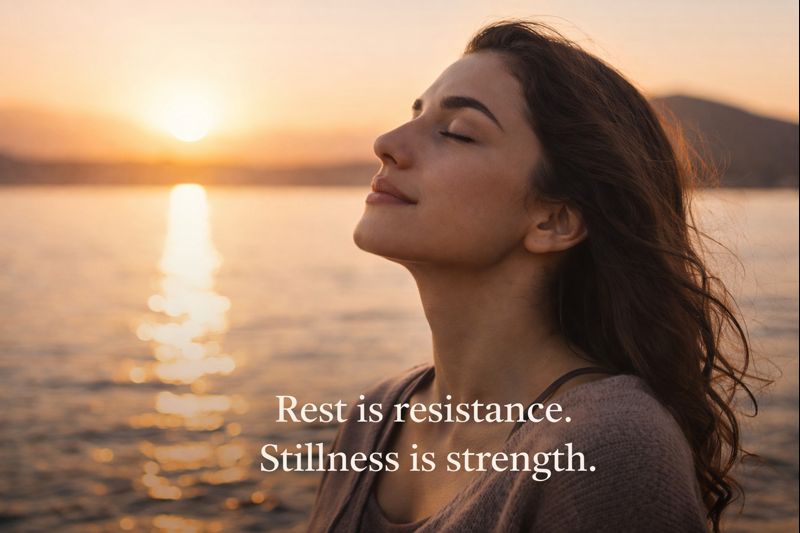
Isolation intensifies suffering. Throughout history, women healed in community through shared stories, collective care, and mutual understanding. Modern life, however, often fragments these connections.
Digital interactions cannot fully replace genuine human presence. Healing accelerates when women feel seen, heard, and believed.
“Healing begins when a woman realizes she does not have to do it alone.”
Safe spaces whether therapy rooms, support circles, or authentic friendships allow women to release shame and reclaim strength. Community transforms pain into shared understanding and resilience.
Redefining Self-Care
Self-care has been commercialized into an aesthetic, but true care is far more fundamental. It is not indulgence, it is maintenance.
Rest is not something to be earned. Nourishment is not optional. Emotional safety is not negotiable.
“Rest is not a reward for exhaustion; it is the foundation of resilience.”
Sustainable mental wellness is built through small, consistent practices: adequate sleep, mindful movement, emotional expression, and compassionate self-talk. These acts may appear ordinary, yet they are profoundly transformative.
The Body Remembers
Women often store emotional stress physically. Tension settles into muscles, breathing becomes shallow, and fatigue lingers without explanation. Healing, therefore, must include the body not just the mind.
Gentle movement, deep breathing, and grounding practices help regulate the nervous system and release accumulated stress.
“The body is not a burden – it is a messenger.”
Listening to physical signals allows women to respond with care rather than force. Healing becomes an embodied experience, not merely a cognitive one.
Mental Health in the Workplace
Professional spaces have long been designed without women’s realities in mind. Rigid schedules, pay inequity, and a lack of emotional support contribute significantly to psychological strain.
Supporting women’s mental health is not an act of charity it is a necessity for sustainable progress.
“Equity is not kindness; it is justice.”
Flexible policies, fair compensation, and open conversations about mental health create environments where women can thrive without sacrificing their well-being.
She Rises: A Collective Awakening
She Rises is not about doing more it is about becoming whole. It begins the moment a woman chooses alignment over approval, health over hustle, and truth over silence. the daughter who refuses inherited burnout, the mother who places healing above expectation, and the elder who finally gives voice to her lived truth.
“When a woman heals herself, she changes the future.”
Rising does not always look loud.At times, it appears as quiet recovery; at others, as the courage to walk away or the strength to reach out for support.
And sometimes, it simply looks like choosing to stay alive in a world that demands too much.
A Future Rooted in Wellness
The future depends on women who are not merely surviving, but thriving women who are emotionally supported, mentally nourished, and deeply valued not for what they produce, but for who they are.
“The world does not need more exhausted women proving their worth.
It needs whole women honoring their humanity.”
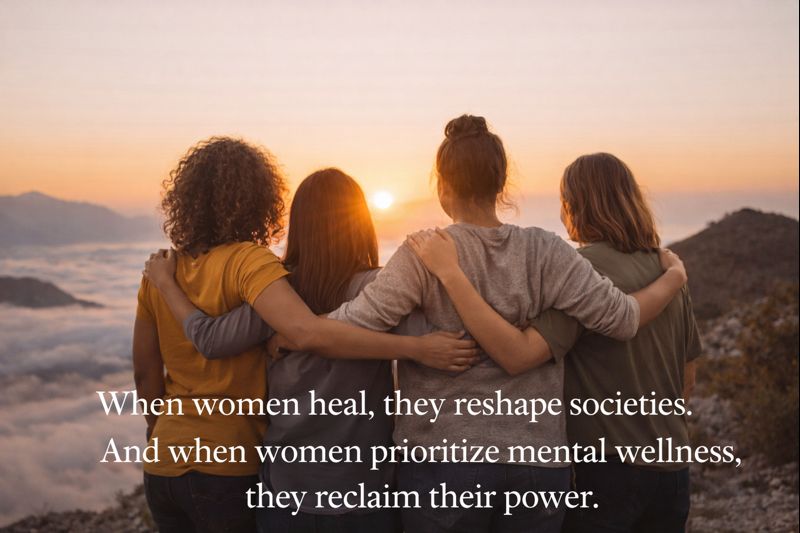
When women rise, they lift generations. When women heal, they reshape societies. And when women prioritize mental wellness, they reclaim their power not quietly, but profoundly.
For more Understanding –
- Women’s wellbeing and the burden of unpaid work – BMJ BMJ
https://www.bmj.com/content/374/bmj.n1972 - Women’s mental health: Navigating pressures of careers, caregiving & societal expectations – Times of India – The Times of India
https://timesofindia.indiatimes.com/life-style/health-fitness/de-stress/womens-mental-health-navigating-the-pressures-of-careers-caregiving-and-societal-expectations/articleshow/113553601.cms
This article is a beautiful and powerful reminder that women should prioritize their own mental health and healing. The writer does an amazing job of explaining how true strength comes from self-care and setting boundaries rather than just enduring pain. It is a very inspiring piece that encourages every woman to stop just surviving and start living a whole, healthy life. Great work Khushi Sharma
The way you’ve captured the quiet strength of women and the importance of healing—not just enduring—really resonates. It feels honest, compassionate, and necessary. This piece reminds us that growth begins when we allow ourselves to heal, and that in itself is an act of courage. Thank you for giving voice to something so many feel but struggle to express. Truly inspiring 💛
This piece by Khushi Sharma is an inspiring and much-needed reminder that women’s strength goes beyond mere survival it lies in the courage to heal, rest, and reclaim space for their own wellbeing. Your words beautifully highlight how the invisible burdens women carry affect mental health and why prioritizing self-respect, boundaries, and emotional care is essential. Thank you for giving voice to a conversation that empowers women to move from enduring pain to nurturing wholeness. 💛✨