
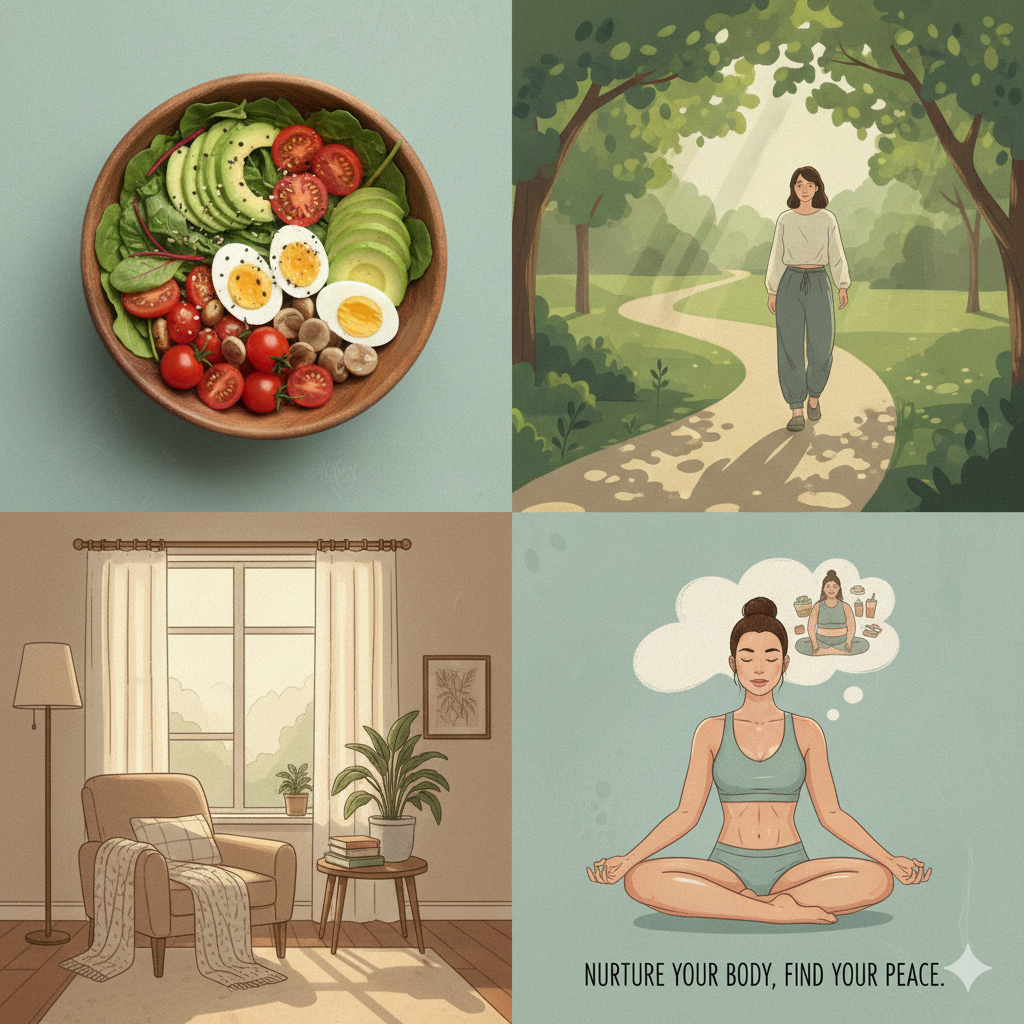
Introduction: Returning Gently to Oneself
For generations, women have learned to endure discomfort in silence—especially when that discomfort lives within their own bodies. Body image struggles and eating disorders are not sudden afflictions; they grow slowly, shaped by culture, comparison, control, and quiet pain. Yet recovery, though demanding, is possible. It is neither rushed nor linear, but it is real.
Healing the relationship between body and mind requires patience, truth, and compassion. While modern medicine offers new tools, traditional values—community support, self-respect, and balance—remain central. This article explores thoughtful, supportive paths toward recovery, grounded in both time-tested wisdom and forward-thinking care.
Understanding Body Image: More Than a Reflection
Body image is not merely how a woman looks at herself in the mirror. Rather, it is how she feels, judges, and speaks to herself internally. These perceptions often begin early, shaped by family beliefs, social expectations, and repeated messages about worth and appearance.
Over time, critical self-observation can turn into constant dissatisfaction. Consequently, the body becomes an object to control instead of a home to inhabit. Recognizing this shift is the first step toward healing.
Importantly, poor body image does not reflect vanity. It reflects vulnerability.
Eating Disorders: When Control Becomes a Cry for Safety
Eating disorders often emerge as coping mechanisms rather than conscious choices. Anorexia, bulimia, binge-eating disorder, and other disordered eating patterns frequently offer an illusion of control during emotional turmoil.
While society may reduce these illnesses to food-related behaviors, the truth is more complex. Eating disorders often coexist with anxiety, trauma, perfectionism, or unresolved grief. Therefore, lasting recovery must address emotional roots, not just eating habits.
Healing begins when we ask not “Why can’t I eat normally?” but “What pain am I trying to manage?”
Breaking the Silence: Why Early Acknowledgment Matters
Silence has long been mistaken for strength. However, when it comes to eating disorders, silence allows harm to deepen. Many women delay seeking help due to shame, fear of judgment, or the belief that their struggle is “not serious enough.”
Yet early acknowledgment significantly improves recovery outcomes. Speaking honestly—to a trusted friend, healthcare provider, or counselor—creates a turning point. It replaces secrecy with support.
Courage, in this context, means allowing oneself to be seen.
The Role of Professional Support in Recovery
While self-help strategies have value, eating disorder recovery benefits greatly from professional guidance. Trained therapists, dietitians, and physicians work together to address both physical health and psychological healing.
Therapy as a Foundation
Evidence-based approaches such as Cognitive Behavioral Therapy (CBT), Dialectical Behavior Therapy (DBT), and trauma-informed therapy help women challenge distorted thoughts and develop healthier coping mechanisms.
Medical Monitoring for Safety
Eating disorders affect heart health, hormones, digestion, and bone density. Regular medical care ensures that recovery proceeds safely and steadily.
Professional support does not replace personal strength; it reinforces it.
Relearning Nourishment: Food as Care, Not Punishment
One of the most delicate aspects of recovery involves rebuilding a healthy relationship with food. For many women, eating has long been associated with guilt, fear, or loss of control.
Recovery reframes nourishment as an act of care rather than a moral test. Gradually, meals become moments of grounding instead of conflict. This process takes time, and setbacks are common. Still, each effort matters.
Importantly, no food is inherently “good” or “bad.” Balance, not restriction, sustains health—an idea echoed across traditional cultures long before diet trends existed.
Healing the Inner Voice: From Criticism to Compassion

Recovery demands attention to internal dialogue. The harsh inner critic, often perfected over years, does not disappear easily. However, it can be challenged.
Practicing self-compassion involves speaking to oneself with the same patience offered to others. When mistakes occur—and they will—gentle redirection proves more effective than self-punishment.
Over time, kindness becomes a discipline. And like all disciplines, it strengthens with practice.
The Power of Support Systems: Healing Together
No woman heals in isolation. Support systems—family, friends, peer groups, or recovery communities—provide stability and perspective. They remind individuals that progress does not require perfection.
Supportive environments emphasize listening over fixing. Often, presence matters more than advice. Simply being believed and respected can restore dignity that illness eroded.
Historically, women healed within circles. Modern recovery, too, flourishes in connection.
Media Literacy: Questioning Harmful Standards
Contemporary media frequently promotes narrow, unrealistic ideals of beauty. Without conscious resistance, repeated exposure fuels dissatisfaction and comparison.
Media literacy empowers women to question these messages rather than absorb them. Curating social media feeds, limiting exposure to triggering content, and following body-diverse voices help protect mental health.
Progress requires skepticism. Not every image deserves belief.
Movement Reimagined: From Obligation to Enjoyment
Exercise often becomes compulsive within eating disorders. Recovery reframes movement as nourishment for the mind and body—not a means of control.
Gentle practices such as walking, yoga, or stretching encourage reconnection with physical sensations. Instead of burning calories, movement becomes a way to experience strength, balance, and presence.
Listening to the body, rather than commanding it, restores trust.
Cultural and Family Influences: Respecting Context
Recovery does not occur in a vacuum. Cultural expectations, family attitudes toward food, and generational beliefs all influence body image. Some traditions emphasize restraint, while others equate food with love.
Rather than rejecting heritage, recovery invites thoughtful examination. Which beliefs serve health, and which cause harm? This discernment allows women to honor the past without being confined by it.
Wisdom evolves when questioned respectfully.
Relapse and Resilience: Redefining Progress
Relapse is often misunderstood as failure. In reality, it is a signal—an invitation to adjust support and deepen understanding. Recovery unfolds unevenly, and setbacks do not erase growth.
Resilience lies in returning to care after difficulty. Each return strengthens insight and self-trust. Over time, coping skills improve, and episodes shorten.
Healing is measured not by perfection, but by persistence.
Building a Future Beyond the Disorder
As recovery progresses, identity expands. Women rediscover interests, ambitions, and relationships previously overshadowed by illness. Life regains texture and possibility.
Setting goals unrelated to appearance—education, creativity, service—grounds recovery in purpose. When meaning grows, the disorder loses relevance.
The future does not demand a flawless body. It asks for a living, present one.
Conclusion: Choosing Wholeness, One Day at a Time
Healing body image and eating disorders requires humility, courage, and sustained support. It honors the wisdom of the past while embracing modern understanding. Most importantly, it affirms that women deserve peace within their own bodies.
Recovery is not a single decision, but a daily practice. Each nourishing meal, honest conversation, and compassionate thought contributes to wholeness.
The body remembers how to heal when it is finally treated as an ally.
For skin care read:
https://shebreaksbarriers.org/wp-admin/post.php?post=210&action=edit