
Feeling constantly anxious, sleepless, or having heavy periods? Learn how common low progesterone symptoms are often mistaken for stress and discover natural ways to support this crucial hormone.
As women, we’re taught to power through. To hustle, to manage the family, to juggle deadlines, and to generally exist in a state of mild, simmering pressure. When we feel overwhelmed, anxious, or just plain off, the default explanation is almost always: stress.
While stress is certainly a reality of modern life, I want to talk to you about a silent thief that often wears the disguise of simple exhaustion or anxiety. This thief is Low Progesterone, and recognizing its subtle signals can be the first step toward reclaiming your peace and your hormonal balance.
You are not imagining the constant jitters or the heavier periods. You are not a failure for feeling overwhelmed. Your body is trying to communicate something deeper. Let’s tune in and hear what it’s saying.
Progesterone: The Queen of Calm
To truly understand what happens when it’s low, we first need to appreciate the role of progesterone. Produced mainly in the ovaries after ovulation, progesterone is one of the key female sex hormones. Often called the “Calming Hormone,” it is the counter-balance to estrogen.
Think of Estrogen as the “go” pedal—it promotes growth and energy. Progesterone is the “stop” pedal—it promotes peace, maturity, and stability.
It Calms: It acts on the brain’s GABA receptors (the same ones anti-anxiety drugs target), providing a natural tranquilizing effect.
It Sleeps: It helps regulate sleep and keep you in a deep, restful state.
It Regulates: It keeps the uterine lining stable, leading to a healthy, lighter period.
It Supports: It’s essential for a healthy pregnancy.
When this Queen of Calm is missing, the balance shifts, and Estrogen can become functionally dominant. This hormonal chaos often mimics the very symptoms we associate with an overloaded life.
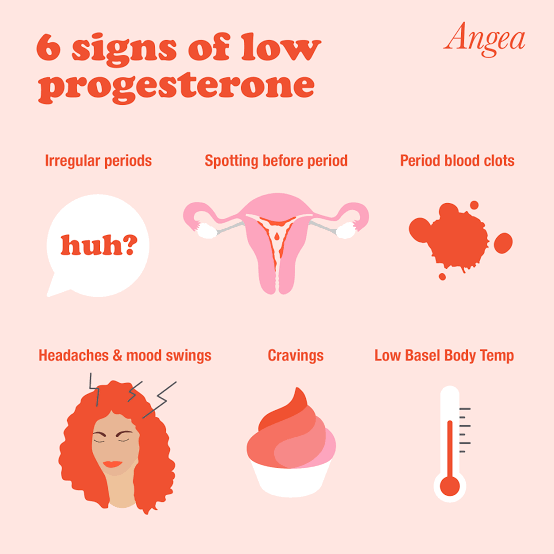
5 Low Progesterone Symptoms You’re Mistaking for Stress
If you’ve checked all the boxes for stress management—meditation, cutting back on coffee, and even trying to get to bed earlier—yet still feel like you’re running on fumes, it might be time to look closer at your hormones.
1. The Anxious Mind: Perpetual Worry
What it feels like (Stress Diagnosis): “I’m just naturally an anxious person.” “I have too much on my plate.” “I can’t turn off my brain at night.”
The Low Progesterone Reality: Because progesterone interacts with GABA, its absence means your body loses its natural chill button. Without this calming influence, you can feel wired, agitated, and hyper-alert. The anxious loop that plays in your mind, especially in the week leading up to your period (the luteal phase), is a classic sign of this imbalance.
2. Sleep Disturbances: Waking Up at 3 AM
What it feels like (Stress Diagnosis): “My to-do list is keeping me up.” “I need to stop looking at my phone before bed.”
The Low Progesterone Reality: Progesterone is linked to deeper, more restorative sleep cycles. If you find yourself having trouble falling asleep or, more commonly, waking up between 2 a.m. and 4 a.m. with a sudden, wide-awake jolt, this often points back to dipping progesterone levels that cannot sustain the deep sleep necessary for true rest.
3. Period Changes: Spotting and Heavy Bleeding
What it feels like (Stress Diagnosis): “My periods are just getting heavier as I get older.” “I had a tiny bit of spotting, but it’s probably fine.”
The Low Progesterone Reality: Progesterone’s main job in the menstrual cycle is to stabilize the uterine lining. When levels are too low, the lining becomes unstable. This can cause spotting before your period (usually 3-7 days before), or it can lead to the lining breaking down aggressively, resulting in a heavier, more painful period—a symptom often linked to estrogen dominance caused by low progesterone.
4. Breast Pain and Tenderness
What it feels like (Stress Diagnosis): “My breasts always hurt before my period, it’s normal.” “I must have slept wrong.”
The Low Progesterone Reality: Estrogen is proliferative—it encourages tissue growth, including breast tissue. Progesterone helps mature and balance this growth. When progesterone is low, estrogen has an unchecked effect, leading to significant swelling, tenderness, and painful cysts in the breasts, most notably in the second half of your cycle.
5. Headaches and Migraines
What it feels like (Stress Diagnosis): “Another tension headache.” “I need more water.”
The Low Progesterone Reality: Hormonal headaches are often a tell-tale sign of the estrogen/progesterone seesaw battle. Specifically, the sharp drop in progesterone just before your period can trigger debilitating migraines or persistent, low-grade headaches that are resistant to regular pain relievers.
Why Is This Happening to Me? The Roots of Low Progesterone
In our high-pressure culture, the number one reason for low progesterone is ironically chronic stress.
When you are stressed, your body prioritizes making the stress hormone cortisol. Your body uses the same precursor molecule—pregnenolone—to make both progesterone and cortisol. When survival is on the line (which is how your body interprets chronic stress, lack of sleep, or undereating), it will shunt all the raw materials toward making cortisol, creating a phenomenon called the “Pregnenolone Steal.” Your body is literally stealing the building blocks meant for the calming hormone (progesterone) to make the survival hormone (cortisol).
Other common causes include:
Anovulation: Not ovulating in a cycle (you can still have a period without ovulating!). If no egg is released, the structure that produces progesterone (the corpus luteum) isn’t formed, and no progesterone is made.
PCOS (Polycystic Ovary Syndrome): This condition often prevents regular ovulation.
Thyroid Issues: An underactive thyroid can interfere with healthy hormone production and balance.
How to Fix It: Practical Steps to Support Your Progesterone
The most effective way to restore progesterone is to tell your body it is safe and nourished. Here are actionable steps you can start today.
1. Prioritize Stress-Reducing Food and Movement
Eat Carbohydrates at Dinner: Your body makes most of its calming hormones while you sleep. Consuming a moderate, complex carbohydrate source (like sweet potato, rice, or squash) at your dinner meal helps stabilize blood sugar and lower cortisol just before bed, allowing your body to focus on progesterone production.
Walk, Don’t Always HIIT: Intense, long-duration cardio (HIIT or marathon training) can signal “danger” to your body and raise cortisol. Swap a few of those high-intensity sessions for long, restorative walks or gentle strength training to support your nervous system.
Don’t Diet Aggressively: Undereating or extreme calorie restriction is a major stressor. Ensure you are getting enough healthy fats (avocados, nuts, seeds, olive oil) and adequate protein, as these are the necessary building blocks for all your hormones.
2. Targeted Nutritional Support
Several vitamins and minerals are key co-factors in progesterone production and utilization:
Magnesium: Often called “nature’s tranquilizer,” magnesium helps relax the nervous system and supports the sleep cycles that allow progesterone to be made. A magnesium glycinate supplement before bed is highly recommended.
Vitamin C: Research suggests that women who supplemented with Vitamin C had higher progesterone levels, possibly by improving the function of the corpus luteum (the progesterone factory).
Zinc and B6: These essential nutrients are directly involved in the process of creating and regulating hormones.
3. The Power of Seed Cycling (A Gentle Approach)
Seed cycling is a simple, natural method used to support the hormone phases of the cycle by eating specific seeds at different times of the month.
Follicular Phase (Day 1 – Ovulation): Eat 1 tablespoon each of Flax Seeds and Pumpkin Seeds daily.
Luteal Phase (Ovulation – Day 1): Eat 1 tablespoon each of Sesame Seeds and Sunflower Seeds daily.
The lignans and fatty acids in these seeds help to either support estrogen (Follicular Phase) or assist progesterone production (Luteal Phase).
You Deserve to Feel Calm
If any of these low progesterone symptoms resonate deeply with you, know this: you are not weak, and you are not “too stressed.” You are a woman with a finely tuned hormonal system that is sending you a clear signal.
Listen to that whisper. Shift your focus from managing the stress to reducing the overall burden on your system. Give your body the building blocks and the peace it needs, and that Queen of Calm—Progesterone—will return to help steady your ship.
Disclaimer: The information provided here is for educational purposes only and is not a substitute for professional medical advice. If you suspect a hormone imbalance, please consult with a healthcare provider, especially an OB/GYN or a functional medicine doctor.