
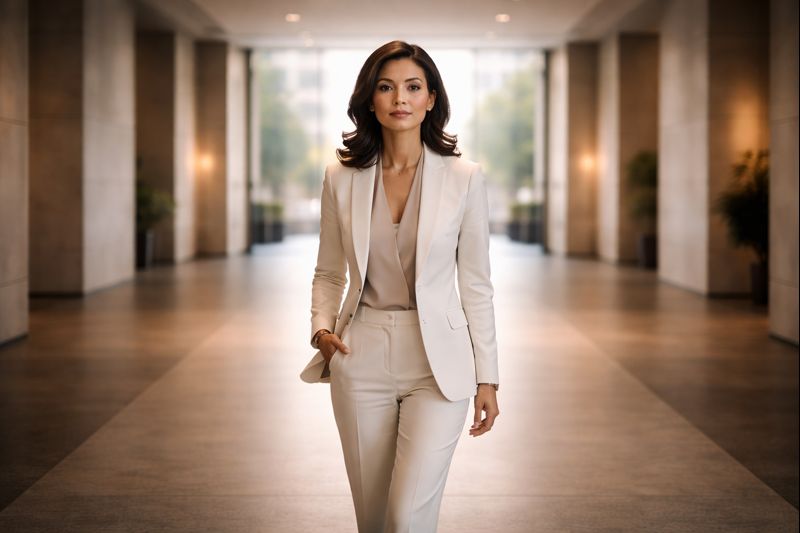
Because the most commanding voices no longer need to raise their volume.
Power once announced itself loudly. It entered rooms with iron fists, thunderous declarations, and an insistence on being seen. But today, power has learned a new dialect one spoken fluently by women who do not dominate spaces yet own them.
This is the era where elegance has become influence, where restraint is not weakness but strategy, and where control is exercised not through coercion, but through composure, precision, and presence. Women in power are no longer asking for authority; they are embodying it.
Their moves are quiet. Their command is subtle. Their impact is undeniable.
“The most powerful woman in the room is the one who does not need to prove she belongs there.”
This article explores that silent mastery the invisible architecture of influence women use to stay in control without spectacle, without apology, and without permission.
The Evolution of Power: From Performance to Poise
Historically, power was theatrical. It demanded visibility, confrontation, and dominance. Leadership rewarded aggression and equated authority with loud certainty. Women entering these structures were told explicitly or implicitly to mirror that behavior to survive.
Many tried. Few thrived.
What emerged instead was a quieter revolution.
Modern women in power are rewriting leadership grammar. They have learned that true control is not performative. It is internal. It is deliberate. It is immovable even when unspoken.
Elegance, once dismissed as ornamental, has become a tactical advantage. Not the elegance of fragility, but the elegance of emotional regulation, intellectual clarity, and measured response. This form of influence disarms opposition because it refuses to participate in chaos.
It is not passive.
It is strategically calm.
Silence as Strategy: The Authority of Restraint
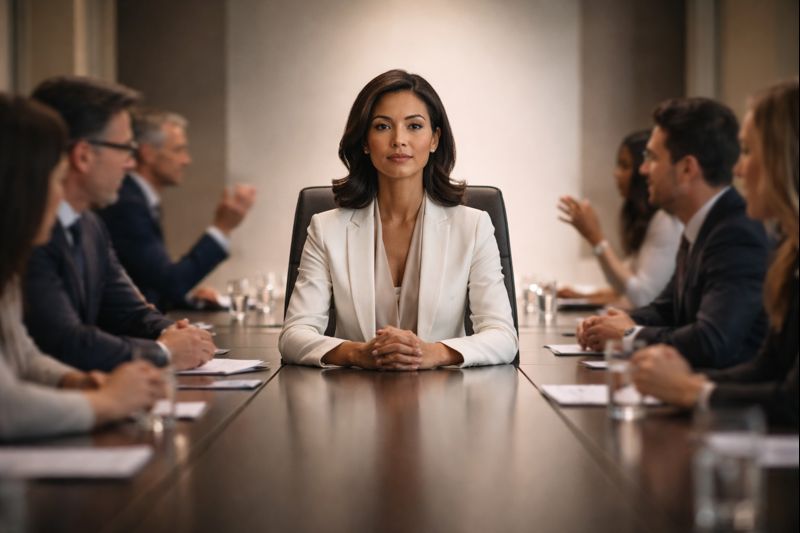
One of the most misunderstood power moves women use is silence.
Not the silence of fear.
Not the silence of erasure.
But the silence of discernment.
In high-stakes rooms, women who speak less often command more attention. They listen acutely. They observe micro-shifts in tone, hierarchy, and intention. When they finally speak, their words land with surgical precision.
Silence becomes a filter. It separates reaction from response.
“Never confuse silence with weakness. It is often the loudest form of control.”
This restraint unsettles environments addicted to noise. It reclaims time. It forces others to fill the void often revealing more than they intended. Women who master this are not overlooked; they are awaited.
Elegance Is Emotional Sovereignty
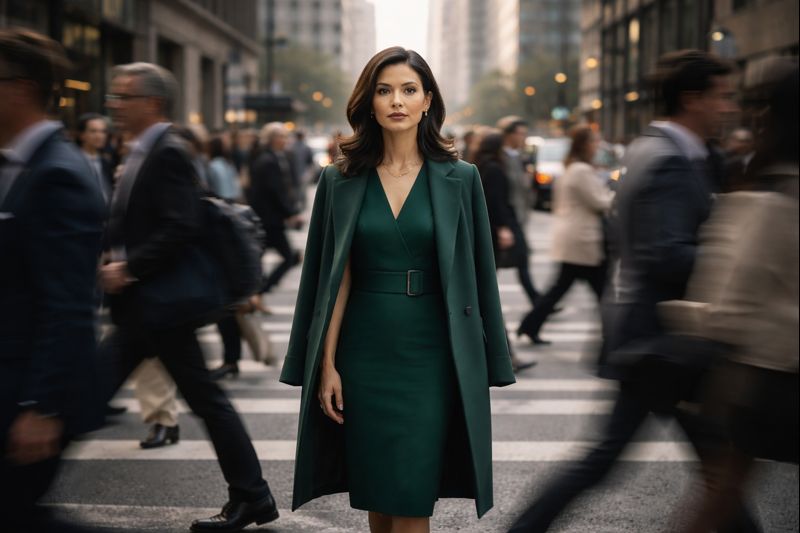
The most potent influence women wield today is emotional sovereignty, the refusal to surrender inner stability to external provocation.
This is not emotional detachment. It is emotional authorship.
Women in power are no longer reactive to disrespect, dismissal, or disruption. They do not escalate every challenge. They do not personalize every resistance. Instead, they remain anchored.
Their calm becomes contagious.
Their composure becomes commanding.
Their steadiness becomes leadership.
This emotional elegance disrupts outdated power dynamics that rely on intimidation. It introduces a new hierarchy one where the most regulated person controls the room.
Presence Over Permission
There was a time when women waited to be validated before stepping forward. That era has expired.
Today’s influential women do not seek permission to lead. They enter with presence, and presence does the negotiation for them.
Presence is not about physical dominance. It is about energetic certainty. It is the unspoken confidence that communicates: I know who I am. I know why I am here. I am not temporary.
This kind of authority does not argue for relevance. It assumes it.

“Confidence is quiet. Insecurity is loud.” – Mark Manson
Women who understand this move differently. They do not chase recognition; they attract alignment.
The Power of Precision Language
Another silent power move is linguistic refinement.
Women in control choose words with intention. Their language is neither apologetic nor aggressive. It is precise, unambiguous, and economically powerful.
They replace “I think” with “I recommend.”
They remove excess explanations.
They speak in conclusions, not disclaimers.
This refined communication establishes authority without confrontation. It signals decisiveness. It eliminates doubt.
Language becomes architecture, the structure through which power flows.
Elegance as Boundary-Setting
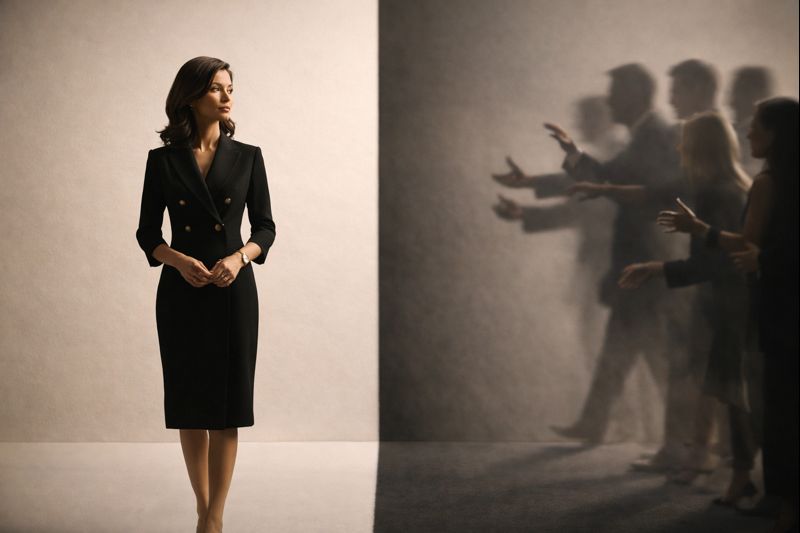
Elegance is often mistaken for accommodation. In truth, it is one of the most effective tools for boundary-setting.
Women in power do not always say “no” loudly. Sometimes they say it through non-negotiable standards, controlled access, and consistent expectations.
They are unavailable to chaos.
They do not over-justify their limits.
They allow discomfort to exist without rushing to resolve it.
This dignified firmness communicates control without hostility. It teaches others how to engage with them on elevated terms.
The Feminine Reframe of Control
Control, when associated with women, has often been unfairly labeled as manipulative or threatening. The new language of power reframes control as stewardship, the ability to hold complexity without domination.
Women lead by orchestration, not oppression. They influence systems by understanding human dynamics deeply. Their control is intuitive, relational, and sustainable.
They know when to advance.
They know when to pause.
They know when silence will achieve more than force.
This is not softness.
This is strategic intelligence.
Elegance in Visibility and Withdrawal
One of the most underestimated power moves is knowing when to step back.
Women in power understand that constant visibility dilutes authority. They do not overexpose themselves. They allow mystery to protect influence.
By choosing when to be present and when to withdraw, they maintain leverage. Their absence becomes noticeable. Their return becomes significant.
This selective visibility preserves power over time.
A New Legacy of Leadership
The rise of elegance as influence is not a trend, it is a recalibration of leadership itself.
Women are no longer molding themselves to patriarchal definitions of authority. They are creating a sovereign model of power one rooted in clarity, emotional intelligence, restraint, and self-trust.
“You don’t have to play masculine to be mighty.”
This evolution does not reject strength. It redefines it.
Power no longer needs to be harsh to be effective. It can be refined, deliberate, and deeply human.
Why This Matters Now
In a world exhausted by noise, volatility, and performative dominance, the quiet confidence of women in control is revolutionary.
This form of leadership builds trust.
It stabilizes systems.
It invites collaboration without surrendering authority.
Most importantly, it allows women to lead without self-betrayal.
Elegance as influence is not about aesthetics. It is about internal alignment the harmony between who a woman is and how she leads.
And that alignment is unstoppable.
The Power That Cannot Be Taken
The most dangerous kind of power is not the one that demands obedience. It is the one that cannot be shaken.
Women who lead with elegance are not fragile. They are unmovable. Their control does not rely on fear or force. It rests on self-possession.
They are not trying to be powerful.
They are power quietly, completely, and on their own terms.
“She remembered who she was and the game changed.” – Lalah Delia
This is the new language of women in power.
And it is being spoken fluently without asking permission.
For readers who wish to explore this theme more deeply:
- Harvard Business Review – Why Emotional Intelligence Is Essential for Leadership
https://hbr.org/2015/01/emotional-intelligence-has-12-elements-which-do-you-need-to-work-on - McKinsey & Company – Women in the Workplace Report https://www.mckinsey.com/featured-insights/diversity-and-inclusion/women-in-the-workplace
- Forbes – The Power of Quiet Leadership https://www.forbes.com/sites/forbescoachescouncil/2018/06/12/the-power-of-quiet-leadership/
- World Economic Forum – Redefining Leadership for the Future https://www.weforum.org/agenda/2020/01/future-of-leadership/