

In a world increasingly driven by innovation, girls undeniably hold immense potential to shape the future. Yet, despite this promise, societal hurdles often obstruct their pathways into STEM fields—science, technology, engineering, and mathematics. Historically speaking, these disciplines have been viewed as male domains. Nevertheless, educators, parents, and policymakers are now actively working to dismantle these long-standing barriers, fostering environments where girls can thrive as inventors, thinkers, and leaders.
This article, therefore, explores the multifaceted challenges girls face in STEM education while simultaneously highlighting strategies that empower them. By consciously encouraging curiosity, resilience, and confidence, we not only nurture individual potential but also pave the way for a more inclusive generation of female innovators.
Moreover, the stakes could not be higher. Women currently represent only about 28% of the global STEM workforce, according to recent UNESCO reports. As a result, this underrepresentation limits diversity in problem-solving and, in turn, constrains innovation and economic growth. However, meaningful change begins with education. Consequently, schools and communities must prioritize girls’ involvement from an early age, intentionally transforming obstacles into opportunities.
Understanding the Barriers
To begin with, girls encounter numerous obstacles when pursuing STEM education. Most notably, deeply ingrained stereotypes continue to whisper that boys naturally excel in math and science, while girls supposedly belong in the humanities. Unfortunately, teachers, peers, and media often reinforce these biases—sometimes unconsciously. For instance, classroom dynamics may favor boys during hands-on experiments, inadvertently leaving girls on the sidelines.
In addition, access to resources plays a crucial role. In many regions—particularly rural or low-income areas—schools lack adequate laboratories, updated technology, or trained instructors. Consequently, girls miss out on essential tools such as computers, microscopes, and robotics kits. Compounding this issue, some families, guided by cultural norms, prioritize boys’ education, thereby widening the gender gap even further.
Equally important, self-doubt begins to take root early. Research from organizations such as the American Association of University Women reveals that girls often lose confidence in STEM subjects around middle school. As this doubt grows, societal expectations amplify it, causing girls to question their abilities. Yet, awareness fuels progress. Accordingly, advocates continue to push for equitable resources and inclusive practices, ensuring that every girl receives a fair opportunity to succeed.
Stereotypes and Societal Influences
From an early age, society relentlessly bombards girls with limiting messages. For example, toy aisles separate “boy” gadgets from “girl” dolls, subtly steering interests along gendered lines. Similarly, popular media frequently portrays scientists as eccentric men, rarely highlighting women in lab coats or leadership roles. Over time, these portrayals shape perceptions and quietly discourage girls from exploring STEM fields.
However, these outdated narratives are increasingly being challenged. In response, campaigns such as #GirlsWhoCode showcase authentic stories of female achievement. At the same time, parents deliberately choose gender-neutral toys, encouraging exploration without boundaries. Meanwhile, schools integrate inclusive curricula that celebrate diverse role models, both past and present.
Furthermore, peer pressure intensifies during adolescence. Girls may face ridicule for appearing “too nerdy” or overly ambitious, leading many to withdraw from advanced STEM classes. To counteract this, mentors and educators create safe spaces through clubs, workshops, and discussion forums. Gradually, girls shift from doubt to determination, reclaiming their rightful place in STEM education.
Lack of Role Models and Mentorship
Without visible role models, girls often struggle to envision themselves in STEM careers. Although historical figures like Marie Curie offer inspiration, they alone are not sufficient. Modern examples of women thriving in technology, engineering, and science remain underrepresented in textbooks and mainstream narratives.
This is precisely where mentorship becomes transformative. Structured programs connect young girls with female professionals who offer guidance, encouragement, and practical insight. For example, initiatives supported by the National Girls Collaborative Project mentor thousands of girls annually. Through these relationships, abstract aspirations become tangible goals.
Moreover, everyday representation holds equal power. Teachers invite guest speakers from diverse backgrounds, making STEM careers feel accessible rather than distant. As a result, girls begin to see themselves as future engineers, biologists, or data scientists. Thus, mentorship turns isolation into empowerment and curiosity into confidence.
Educational Initiatives Breaking the Mold
Notably, innovative programs are reshaping STEM education for girls worldwide. Organizations such as Girls Who Code employ project-based learning to teach coding in engaging, meaningful ways. Rather than memorization, participants build apps that address real-world challenges, thereby strengthening both technical skills and self-belief.
Similarly, schools have adopted extracurricular STEM clubs that encourage experimentation without the pressure of grades. Teachers incorporate robotics kits, simulations, and collaborative problem-solving exercises. In fact, a California district reported a 40% increase in girls’ enrollment in advanced math courses after introducing such initiatives.
Beyond local efforts, global programs further amplify impact. UNESCO’s STEM and Gender Advancement project trains educators to recognize bias and promote equity. Additionally, partnerships with technology companies provide scholarships and internships, effectively removing financial barriers. Together, these initiatives educate, inspire, and sustain long-term engagement.
The Role of Families and Communities
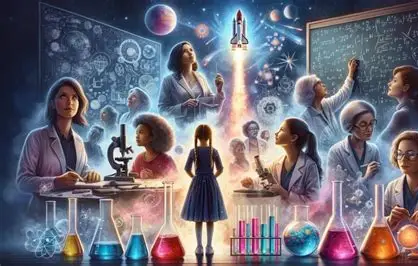
Importantly, families serve as the first foundation for girls’ STEM journeys. Parents nurture curiosity by visiting science museums, encouraging questions, or conducting simple experiments at home. Even small actions, such as assembling a model or observing nature, spark lifelong interest.
Beyond the home, communities extend this support. Libraries host free coding workshops, while local organizations sponsor hackathons and science fairs. Through these experiences, girls develop collaboration, resilience, and leadership—qualities essential for innovators.
In parallel, advocacy groups campaign for policy reform and increased funding in underserved areas. By uniting these efforts, families and communities create ecosystems where girls can flourish academically and confidently.
Looking Ahead: Strategies for the Future
Looking forward, sustaining progress requires deliberate and bold strategies. Governments invest in teacher training, equipping educators with inclusive teaching methodologies. Simultaneously, policies mandate equitable participation in STEM programs, supported by transparent data tracking.
Technology, too, plays a pivotal role. Online platforms provide virtual labs, while educational apps democratize access to quality instruction. Emerging innovations, such as AI-powered learning assistants, offer personalized guidance, further bridging gaps.
Moreover, collaboration across sectors accelerates momentum. Universities partner with industries to offer internships for high school girls, demystifying STEM careers through real-world exposure. Consequently, education transitions seamlessly into opportunity.
Empowering the Next Generation
In conclusion, breaking barriers in girls’ STEM education is not a solitary task but a shared responsibility. By dismantling stereotypes, amplifying role models, and strengthening educational initiatives, we empower girls to step confidently into innovation-driven futures. Ultimately, as more girls enter STEM fields, industries evolve, societies progress, and the world benefits from a richer diversity of ideas.
Therefore, let us commit—steadfastly and collectively—to nurturing a future where every girl is free to question, create, and innovate without limitation.
For women empowerment:
https://shebreaksbarriers.org/wp-admin/post.php?post=94&action=edit