
Introduction
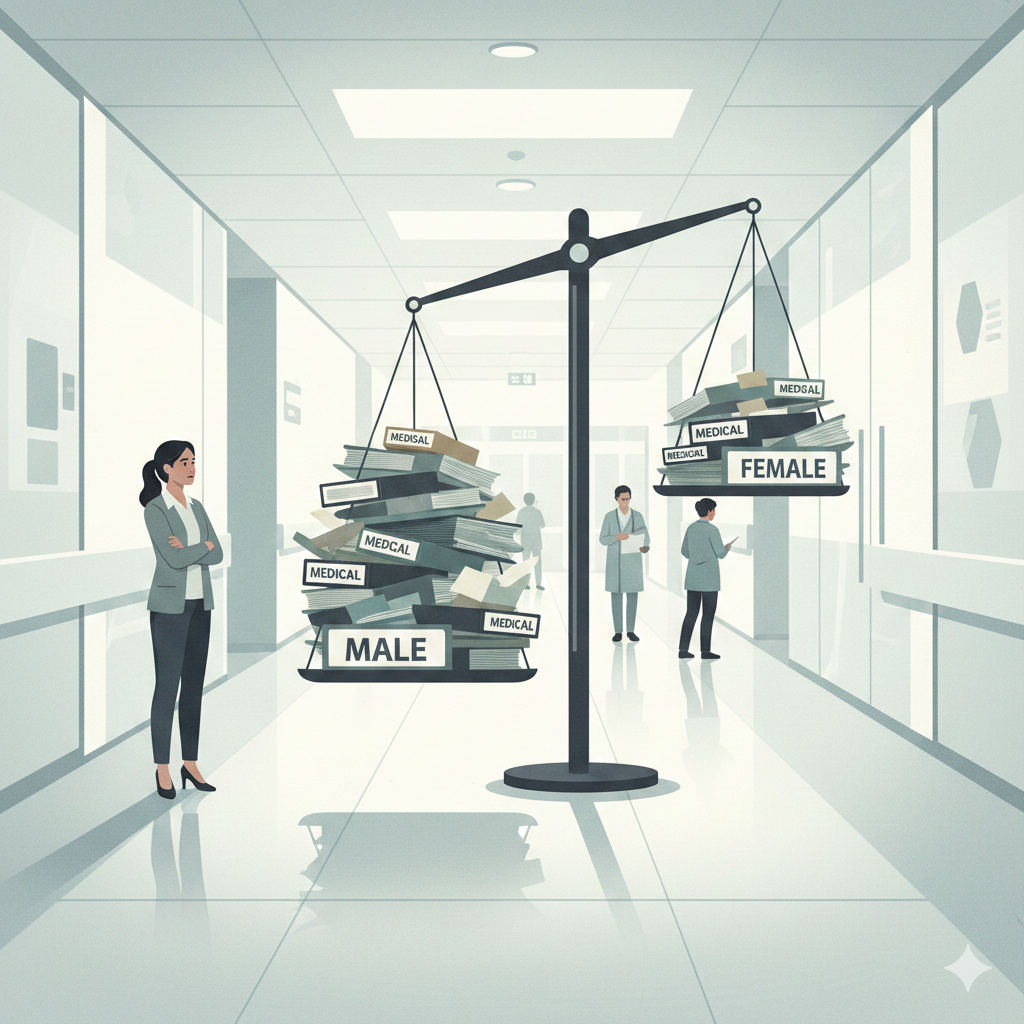
Too often, doctors overlook women’s pain, dismissing women’s experiences as exaggeration or hysteria within medical care. As a result, countless women patients endure misdiagnoses, delayed care, and unnecessary suffering. Despite decades of awareness and research, gender bias in women’s healthcare and medical care remains deeply entrenched in 2025. From routine checkups to life-threatening emergencies, women’s medical care and concerns are still taken less seriously than those of men.
Historically, male-dominated research has shaped diagnostic standards and treatment protocols. Consequently, women’s symptoms—often different in presentation—are misunderstood or ignored. For example, heart disease continues to kill more women than men each year, yet providers frequently miss female-specific warning signs such as nausea, fatigue, or jaw pain.
Moreover, policy decisions worsen the problem. Funding cuts to women’s health research widen existing gaps. According to the World Economic Forum, nine conditions that disproportionately affect women account for a significant disease burden—yet receive less than one percent of research funding.
Nevertheless, momentum for change is growing. Women, advocates, and healthcare professionals increasingly demand equity. Therefore, this article examines the roots of medical gender bias, its consequences, key developments in 2025, and concrete strategies for reform. Ultimately, empowering women in healthcare is not optional—it is lifesaving and economically vital.
Understanding Gender Bias in Healthcare
To understand the problem fully, we must look backward. For decades, medical research treated male bodies as the default model. Researchers routinely excluded women from clinical trials, citing hormonal variability. As a result, this flawed assumption continues to shape modern medical education.
Even today, medical schools often label women’s symptoms as “atypical.” For example, clinicians still treat jaw pain or shortness of breath during a heart attack as exceptions rather than common warning signs in women. Consequently, healthcare systems diagnose women more slowly and delay critical interventions.
Moreover, bias emerges in everyday clinical encounters. Providers frequently attribute women’s fatigue, pain, or dizziness to stress or anxiety, yet they investigate the same symptoms more thoroughly in men. Elizabeth Comen, a breast cancer specialist at NYU, notes that medical training focuses heavily on reproductive health while overlooking women’s neurological and cardiovascular needs.
Additionally, structural bias deepens inequity across healthcare systems. Developers train diagnostic algorithms on male-centered data, which increases error rates for women. A 2025 AAMA report identifies two primary causes: the long-standing exclusion of women from medical research and the persistent view of women’s health as a “specialty issue” rather than a core medical priority.
Finally, cultural stereotypes continue to shape clinical judgment. Many women report that providers question or minimize their pain more aggressively. Although institutions offer unconscious bias training programs, organizations implement them unevenly. Therefore, experts call for comprehensive systemic reform rather than superficial corrective measures.
The Impacts on Women’s Health
As a consequence of persistent bias, women face serious health outcomes. Most notably, women wait longer for cardiac care, increasing mortality rates by up to 50 percent in certain cases. Symptoms are mislabeled as anxiety or indigestion, allowing conditions to worsen.
Similarly, chronic pain conditions suffer neglect. Endometriosis affects roughly one in ten women, yet diagnosis takes an average of seven years. Instead of imaging or referrals, patients are often prescribed antidepressants. Migraines—another female-predominant condition—remain underfunded and undertreated.
Mental health also intersects with bias. While women are more frequently diagnosed with anxiety, physical causes are often overlooked. In one 2025 case, a breast cancer patient’s stroke symptoms were dismissed as stress until persistent advocacy forced further evaluation.
Furthermore, reproductive and maternal healthcare reveal stark inequities. Black women die from pregnancy-related causes at three times the rate of white women. These outcomes stem from both racial and gender bias, compounded by neglect of social determinants of health.
Economically, the cost is staggering. Gender bias in healthcare results in millions of lost healthy life years annually and increases hospitalizations. Families shoulder caregiving burdens, while nations lose productivity. Therefore, addressing bias is both a moral and economic imperative.
For women health :https://shebreaksbarriers.org/wp-admin/post.php?post=376&action=edit
Recent Developments and Data in 2025
In 2025, policy shifts significantly reshape women’s healthcare. The Trump administration removed key resources from womenshealth.gov, including maternal care frameworks and reproductive rights guidance. Simultaneously, newly added content emphasized binary sex definitions, limiting inclusive care information.
At the same time, funding freezes stalled women-focused medical research. According to KFF, federal dollars earmarked for women’s health were blocked, slowing progress on conditions like endometriosis and autoimmune diseases.
However, new research continues to expose disparities. A November 2025 journal review highlights persistent underrepresentation of women in trials and a lack of sex-disaggregated data. The WHO responded in April with a global call to action, urging inclusive research practices to save an estimated $1 trillion annually.
Additionally, Harvard Medical School publications criticize the ongoing “boobs and tubes” approach to women’s health. Encouragingly, artificial intelligence shows promise. Companies like Aitia develop models that better predict female-specific disease patterns.
Overall, data in 2025 confirms both the depth of bias and the urgency for reform.
Advocacy Efforts and Organizations
Meanwhile, advocacy efforts intensify. Women’s Health Advocates, led by Liz Powell, lobby for national reforms and mandatory bias training. Their coalitions influence state-level legislation and funding priorities.
Globally, the WHO mobilizes partners to address intersectional disparities, while the World Economic Forum’s WHIT Platform tracks economic losses tied to gender gaps. Grassroots organizations amplify marginalized voices, particularly Black women and women with disabilities.
Digital activism accelerates change. Campaigns such as #EndTheBias trend widely, sharing patient stories that pressure institutions. As a result, several states mandate inclusive medical curricula.
Strategies for Individuals and Systems
On an individual level, women can advocate for themselves by documenting symptoms, seeking second opinions, and requesting equitable care. Community engagement—through workshops and advocacy groups—strengthens collective power.
Systemically, hospitals must adopt sex-disaggregated data standards and diversify research populations. Policymakers should fund inclusive trials and enforce accountability.
Most importantly, healthcare providers must practice reflective medicine—questioning assumptions and listening deeply.
Looking Forward: Paths to Equity
Looking ahead to 2026, momentum builds. Ballot initiatives, AI-driven diagnostics, and global alliances promise progress. Nevertheless, challenges such as funding cuts remain.
Still, history shows that sustained advocacy yields change. Equity is achievable—but only through persistent effort.
Conclusion
Gender bias in healthcare continues to harm women physically, emotionally, and economically. However, awareness, data, and advocacy offer a path forward.
Now is the time to act. Speak up. Support reform. Demand equity. The future of women’s health—and society itself—depends on it.
Initiative by WHO for women health :