
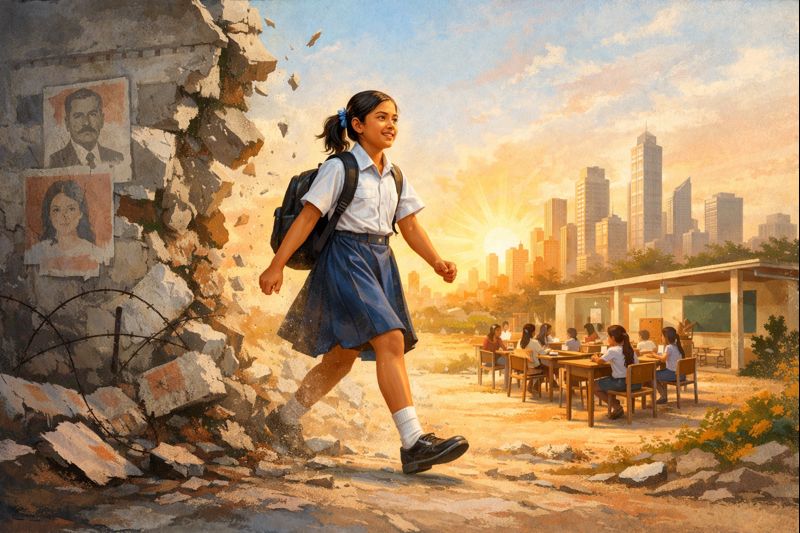
“When you educate a girl, you educate a nation.”
Across continents and cultures, the story of girl’s education is inseparable from the story of power who holds it, who shapes it, and who is excluded from it. While classrooms may appear neutral spaces, the pathways that lead girls into them are often blocked by deeply entrenched political barriers. Laws, policies, budgets, and governance systems decide whether a girl’s potential is nurtured or neglected. In a world striving for economic resilience and inclusive growth, dismantling these political barriers to girl’s education is not just a moral imperative it is a powerful economic strategy.
Education Is Political – Especially for Girls
Education is frequently framed as a social issue, but at its core, it is profoundly political. Decisions about compulsory schooling laws, curriculum content, public spending, and safety regulations are made in legislative chambers, not classrooms. For girls, these decisions carry additional weight because gender norms, cultural biases, and power imbalances often shape policies in ways that restrict rather than expand their opportunities.
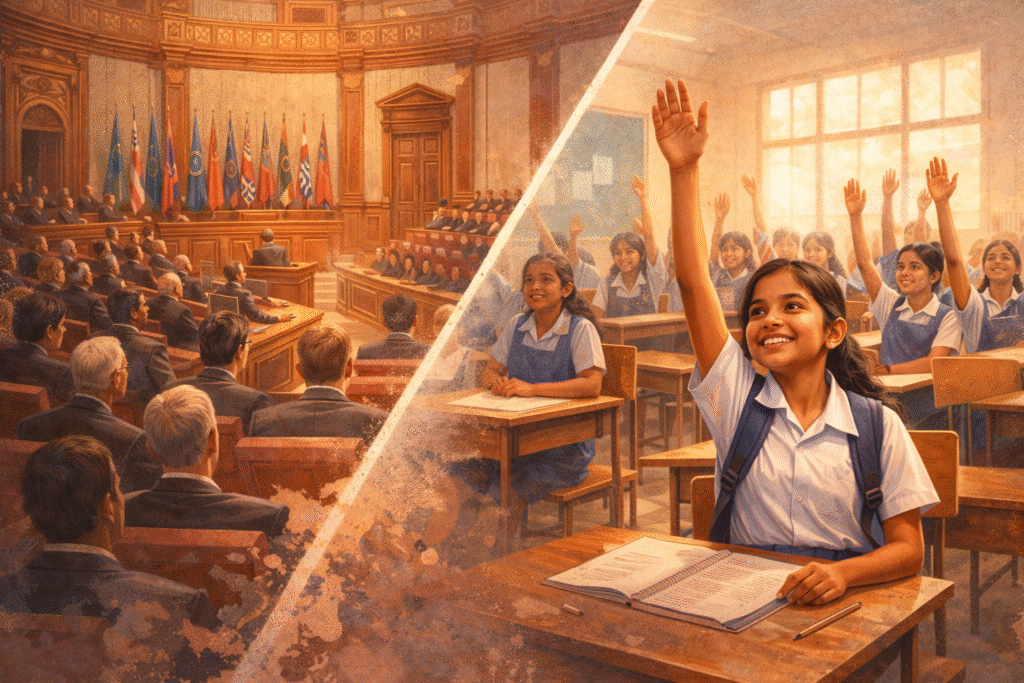
In many countries, girls education is undermined by child marriage laws with loopholes, weak enforcement of anti-discrimination statutes, and inadequate funding for public schools in marginalized communities. Political instability and conflict further exacerbate these challenges, pushing girls out of school first and longest. When governments fail to prioritize girls in education policy, the message is clear: their futures are negotiable.
Yet history shows that when political will aligns with gender equity, change accelerates. Education reforms that explicitly target girls have consistently delivered social and economic returns that far exceed their initial investment.
The Economic Cost of Excluding Girls
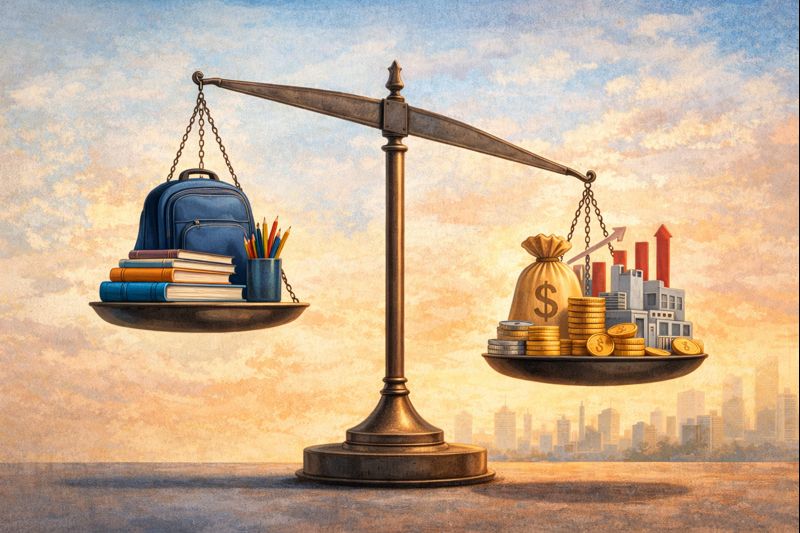
The exclusion of girls from education is not a quiet loss; it is an economic hemorrhage. The World Bank has repeatedly estimated that countries lose trillions of dollars in lifetime productivity and earnings due to gaps in girls education. When girls are denied schooling, economies forfeit skilled workers, innovative thinkers, and resilient leaders.
Educated girls are more likely to enter the formal workforce, earn higher incomes, and reinvest a significant portion of their earnings into their families and communities. They contribute to higher labor productivity, increased tax revenues, and reduced dependency on social welfare systems. Conversely, limited education perpetuates cycles of poverty, poor health outcomes, and intergenerational inequality.
In macroeconomic terms, girls education acts as a multiplier. Each additional year of schooling can raise a woman’s future earnings significantly, while also improving national indicators such as GDP growth, child survival rates, and social stability. Political barriers that restrict this access therefore function as economic barriers, slowing growth and deepening inequality.
Laws That Limit, Laws That Liberate
Legal frameworks can either confine girls or set them free. In some regions, outdated laws restrict girls mobility, limit their right to inherit property, or fail to protect them from gender-based violence, all factors that directly affect school attendance and retention. Even where progressive laws exist, weak implementation often renders them symbolic rather than transformative.
On the other hand, countries that have enacted and enforced gender responsive education policies offer compelling evidence of what is possible. Free and compulsory secondary education for girls, safe transportation policies, menstrual health inclusion, and strict enforcement of child protection laws have dramatically increased enrollment and completion rates.
Political leadership matters here. When policymakers view girls education not as charity but as infrastructure essential to national development, the legal environment begins to shift. Laws become tools of liberation rather than limitation.
Budgets Reveal Priorities
Political commitment is most clearly visible in budgets. Allocating sufficient resources to education, particularly for girls from disadvantaged backgrounds, signals seriousness beyond speeches and slogans. Yet education budgets are often the first to be cut during economic downturns, and within them, programs targeting girls are treated as optional add-ons.
Investment in girls education must be intentional and intersectional. Rural girls, girls with disabilities, girls from minority communities, and girls affected by conflict face layered disadvantages that generic policies cannot address. Targeted scholarships, conditional cash transfers, and community-based schooling initiatives have proven effective when backed by sustained funding.
From an economic perspective, these investments are not expenses but high yield assets. Every dollar spent on girls education generates returns in the form of healthier populations, more robust labor markets, and stronger institutions.
Education as a Catalyst for Women’s Economic Power
Education does more than prepare girls for jobs; it prepares them for agency. An educated girl is more likely to delay marriage, make informed health decisions, and participate in civic life. These outcomes have profound economic implications. Women with education are more likely to become entrepreneurs, innovators, and contributors to emerging sectors such as technology, renewable energy, and social enterprise.
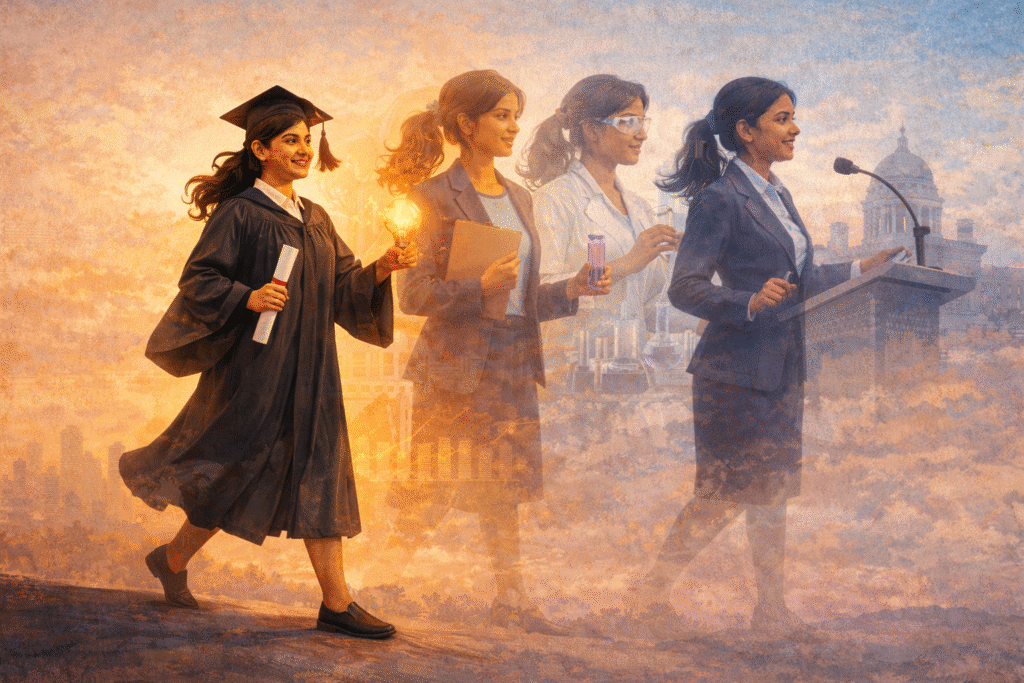
Political systems that support girls education therefore lay the groundwork for diversified and resilient economies. They expand the talent pool, reduce gender gaps in employment, and foster inclusive growth that benefits entire societies.
“There is no greater pillar of stability than a strong, free, and educated woman.” – Angelina Jolie
This stability is not abstract. It is reflected in lower conflict rates, stronger democratic participation, and more equitable economic structures.
The Global Ripple Effect
The impact of breaking political barriers to girls education extends far beyond national borders. In an interconnected global economy, disparities in education contribute to uneven development, migration pressures, and global inequality. Educating girls worldwide strengthens global supply chains, enhances innovation, and supports sustainable development goals.
Countries that invest in girls education are better positioned to compete in knowledge-based economies. They produce graduates who can adapt to technological change, participate in global markets, and contribute to international problem-solving. In this sense, girls education is not only a domestic policy issue but a global economic strategy.
The Role of Civil Society and Grassroots Movements
While governments hold formal power, change is often driven by those who challenge the status quo from the ground up. Civil society organizations, educators, activists, and young leaders have played a critical role in pushing girls education onto political agendas. Platforms like She Breaks Barrier exemplify how storytelling, advocacy, and evidence based research can influence policy debates.
Grassroots movements amplify the voices of girls themselves, transforming them from passive beneficiaries into active stakeholders. When girls speak about their experiences, barriers become visible, and solutions become harder to ignore.
Reimagining Political Will
Breaking political barriers requires more than policy reform; it demands a shift in mindset. Girls education must be seen as central to national identity and economic vision. Political leaders must ask not whether they can afford to invest in girls, but whether they can afford not to.
This reimagining involves inclusive governance, where women are represented in decision-making spaces and gender data informs policy design. It also requires accountability mechanisms that ensure commitments translate into measurable outcomes.
A Future Built by Educated Girls
The path to stronger global economies does not lie solely in technological advancement or financial reform. It lies in classrooms where girls are encouraged to think, question, and lead. Removing political barriers to girls education unlocks human potential on a scale unmatched by any other intervention.
“The most powerful weapon which you can use to change the world is education.” – Nelson Mandela
When girls learn, economies grow. When they are empowered, societies stabilize. And when political systems choose inclusion over inertia, the benefits ripple across generations.
Breaking political barriers to girls education is not an act of generosity it is an act of strategic foresight. It is a declaration that the future economy will be built not by excluding half the population, but by educating and empowering it.
Resources for Deeper Understanding –
- World Bank official page:
https://www.worldbank.org/en/topic/education/publication/missed-opportunities-the-high-cost-of-not-educating-girls - UNESCO GEM Report 2025 – Women Lead for Learning
https://www.unesco.org/gem-report/en/publication/2025-gender-report - UNESCO GEM Report PAST Gender Reviews (including the 2018 Gender Review)
https://www.ungei.org/website/global-education-monitoring-report-gemr-gender-reports