
Introduction: Shattering the Silence Around Women’s Mental Health
Every day, women move through life wearing many faces—provider, caregiver, leader, peacemaker. Strength is expected, resilience assumed, and grace demanded. Yet beneath these roles, countless women quietly wrestle with invisible struggles such as anxiety, depression, and unresolved trauma. Too often, society dismisses these battles as “just emotions,” rather than recognizing them as genuine health concerns.
Even in 2025, despite growing awareness, women continue to face a disproportionate mental health burden. According to the World Health Organization, women experience depression at nearly twice the rate of men, influenced by hormonal changes, caregiving responsibilities, social expectations, and workplace pressures.
This article brings those hidden struggles into the light. Through real women’s stories, an honest examination of stigma, and practical strategies for open dialogue, it seeks to empower women to speak, to seek help, and to support one another. Because silence protects stigma—but conversation dismantles it.
The Harsh Realities: Why Women’s Mental Health Demands Urgent Attention
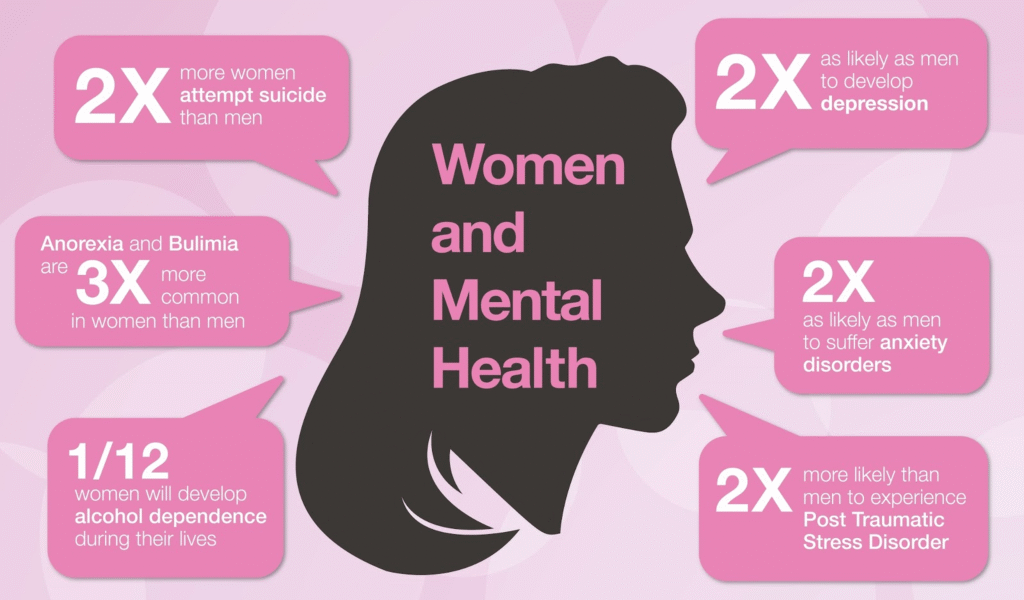
To begin with, women face mental health challenges that numbers alone cannot fully explain. For example, postpartum depression affects nearly 15% of new mothers, according to the Centers for Disease Control and Prevention. Hormonal shifts during pregnancy, childbirth, and menopause can intensify mood disorders, while social expectations often leave women feeling they must “cope quietly.”
At the same time, external pressures compound these internal struggles. The COVID-19 pandemic, for instance, widened existing gaps. A 2023 American Psychological Association report revealed that 62% of women experienced heightened anxiety, compared to 47% of men. Economic stress adds another layer—women still earn, on average, less than men, which fuels long-term financial anxiety and burnout.
Moreover, gender-based violence remains a grim reality. The United Nations reports that one in three women globally experiences physical or sexual violence, frequently leading to post-traumatic stress disorder. Yet many women delay seeking therapy due to cost, time constraints, or fear of judgment.
Still, awareness creates opportunity. Mental health professionals increasingly recommend simple, grounding practices—such as journaling or mindful breathing—to identify emotional triggers early. When women begin to recognize patterns rather than suppress them, healing becomes possible. From this awareness, powerful personal stories emerge.
Voices Unheard No More: Inspiring Stories from Women Warriors
Consider Sarah, a 32-year-old marketing executive in Chicago. On the surface, she appeared confident and successful. Behind closed doors, however, anxiety attacks left her breathless. “I felt like a fraud,” she recalls. One evening, after breaking down alone in her car, she confided in a coworker. That single conversation opened the door to shared vulnerability—and eventually, workplace mental health discussions that benefited an entire team.
Similarly, in London, Aisha, a 45-year-old teacher and single mother, faced profound grief after losing her sister to suicide. Cultural expectations urged silence: strong women don’t cry. Instead of retreating, Aisha chose to write. Her blog, Threads of Healing, now connects thousands of women who share stories of loss, resilience, and renewal.
Meanwhile, in rural Texas, Elena struggled with depression following a PCOS diagnosis. Medical care addressed her physical symptoms but ignored her emotional pain. Online support groups became her lifeline. Today, she advocates for holistic care models that treat mental and emotional health together.
These stories share a common truth: speaking does not weaken women—it strengthens communities. Each voice, once released, creates space for others to follow.
Unmasking the Stigma: How Societal Norms Silence Women’s Struggles
Despite progress, stigma remains deeply rooted. Society still promotes the myth of the “perfect woman”—capable, calm, selfless, and endlessly strong. As a result, many women hide their pain. A 2024 Mental Health America survey found that 40% of women conceal symptoms due to fear of being labeled dramatic or weak.
Media narratives worsen the problem. Idealized portrayals of motherhood, productivity culture in workplaces, and unrealistic standards of emotional control leave little room for honesty. Consequently, untreated anxiety and depression often lead to long-term physical illnesses, including heart disease.
Yet stigma is not immovable. When public figures and everyday women speak openly, silence loses its power. Campaigns that normalize mental health conversations—online and offline—prove that naming the problem is the first step toward healing.
For a deeper understanding of how stigma impacts access to care, explore this related resource:
👉 Understanding Mental Health Stigma in Women
Igniting Conversations: Practical Strategies for Open Dialogue
Starting conversations about mental health may feel uncomfortable—but small steps matter. Begin by choosing a safe setting: a walk, a quiet coffee, or a familiar space. Use simple “I” statements such as, “I’ve been feeling overwhelmed lately.” This invites empathy rather than defensiveness.
Equally important is listening. When someone shares, resist the urge to fix. Instead, acknowledge their experience: “That sounds really heavy.” Validation, not solutions, builds trust.
Technology also plays a role. Anonymous platforms and workplace mental-health allies help reduce barriers to speaking up. Over time, these small, consistent conversations create cultures of care rather than silence.
To learn more about building supportive conversations, you may also find this guide helpful:
👉 How to Start Healthy Mental Health Conversations
Forging Alliances: The Power of Supportive Networks
Healing rarely happens alone. Families, friends, workplaces, and communities all shape mental well-being. When parents model emotional openness, children learn that seeking help is normal—not shameful. Friendships provide daily emotional anchors, while inclusive workplace policies reduce burnout and isolation.
Globally, community-based programs—such as India’s Sangath initiative—demonstrate how culturally sensitive care can reach women who might otherwise be overlooked. However, support must also be inclusive. Women from marginalized communities need spaces that understand intersectional challenges.
Ultimately, networks remind women of a simple truth: support multiplies strength.
Empowering Change: Resources and Pathways Forward
Access to the right resources turns intention into action. Trusted helplines, online therapy platforms, guided meditation apps, and books on trauma and self-trust offer practical support. Advocacy also matters—policies that ensure mental health parity and affordable care protect future generations.
On a personal level, progress begins with noticing small victories. Writing them down, sharing them, and celebrating them reinforces healing. These tools are not quick fixes—they are foundations for lasting well-being.
Conclusion: Your Voice, Our Revolution
Women’s mental health stories are not side notes—they are central to societal progress. Each shared experience weakens stigma and strengthens understanding. From personal courage to collective action, dialogue remains our most powerful tool.
So begin where you are. Speak to one person. Listen deeply. Share honestly. In doing so, you contribute to a quieter revolution—one built not on noise, but on truth.
Together, women rise—not by hiding pain, but by naming it.
Study more about women health here;